 Volata Travels & Events (PVT) LtdHot Line / WhatsApp: +94 71 694 6693 / +94 71 897 9909info@volatatravels.com | www.volatatravels.com |
431/1/1 Kandy Road, Dalugama, Kelaniya, Sri Lanka | General line: +94 11 227 3732 | SLTDA License: SLTDA/SQA/TA/02471 |
Private Tour · 4★ hotels Complete Sri Lanka Expedition – 4-Star Hotels4-star hotel version: Two weeks around the island with a private driver-guide: ancient cities, Kandy, tea hills, the scenic train, two safaris and Galle Fort, ending in Mirissa. Private Tour · 4★ hotelsModerate intensityEnglish-speaking guide Tour priceFromUSD 1,579per person A 14 day Sri Lanka expedition is for travellers who want to see the whole of the island's classic route in one trip, and who are happy to keep moving to do it. It joins the three ancient capitals of the north, the hill capital of Kandy, the tea country and Ella, two different wildlife parks and a finish on the south coast, all with one private driver-guide and the same comfortable air-conditioned vehicle throughout. Stay in 4-star hotelsThis version of the tour is booked in 4-star hotels for all 13 nights: Fairway Colombo in Colombo, Amaya Lake in Sigiriya, Rajarata Hotel in Anuradhapura, Hotel Sudu Araliya in Polonnaruwa, Mahaweli Reach Hotel in Kandy, Araliya Green Hills in Nuwara Eliya, Te Dalu Resort & Spa in Ella, a comfortable 4-star hotel in Udawalawe, Chaarya Resort & Spa in Tissamaharama and Mandara Resort in Mirissa, or similar hotels of the same standard. Rooms are double or twin, or single if you travel alone, with breakfast included each morning. The route, the sightseeing and your private driver-guide are the same as on the 3-star and 2-star version of this tour, so the difference is a more comfortable room, a better restaurant and pool, and in most places a quieter setting. Lunch, dinner, entrance fees, activity fees and train tickets are not included in the price. Who the 14 day Sri Lanka expedition suitsThe pace is steady rather than relaxed, and the programme is full from the first morning. Most nights are spent in a new place, with a few doubled-up stays in Sigiriya, Kandy and Ella to break the rhythm. It suits couples, families with older children and friends who enjoy history, scenery and wildlife in equal parts, and who are comfortable with some long days in the car. Compared with a shorter circuit you see far more of the north, adding Anuradhapura and Polonnaruwa as well as Sigiriya. Compared with a longer version there are no extended beach days, so the sea is saved for the last evening. If you want several nights by the water, we can lengthen the trip rather than squeeze the sights. Think of it as the complete circuit, designed in a sensible direction. You begin with the flat, hot plains while you are fresh, climb gradually into the cool hills as your body adjusts to the island, then descend to the wildlife parks and the sea when you are ready to slow down. The route, night by nightYou spend one night in Colombo, two in Sigiriya, then one each in Anuradhapura and Polonnaruwa, two in Kandy, one in Nuwara Eliya, two in Ella, one in Udawalawe, one in Tissamaharama and a final night in Mirissa. Breakfast is included each morning at your hotel. Lunch and dinner are your own choice, and your driver-guide is happy to suggest good local restaurants. Highlights you will rememberThe days build on one another. Pinnawala's elephants bathing in the river come first, followed by the climb to King Kashyapa's fortress and the painted caves at Dambulla. A village morning with a bullock cart, a canoe ride and a wood-fired lunch leads into the pilgrims' city of Anuradhapura, and the next day you walk among the Buddhas of Polonnaruwa and watch sunset from Pidurangala. In Kandy you attend a dance performance and visit the Tooth Relic temple, then in the hills you taste fresh tea and ride the scenic train to Ella. The wildlife finale includes elephants at Udawalawe and a dawn safari at Yala, and Galle Fort rounds off the culture before you reach the coast. Between the big sights there are quieter moments that tend to stay in the memory just as long: the smell of a spice garden in Matale, a cup of tea made from leaf picked that morning, the sound of drums in Kandy, a lazy day in Ella with nothing to do but walk and look. Comfort, transport and your driver-guideYour English-speaking driver-guide stays with you from the airport to the last day, so you never need to book transport or find your way around. Hotels are comfortable three-star and two-star properties chosen for their location. Entrance fees, jeep fees and train tickets are paid separately, and your guide explains what is needed before each visit so there are no surprises. When to travelThe island has two monsoons, so no single month is perfect everywhere. The west, south-west and hill country are usually driest from December to March, and the cultural north and east are best from April to September. The parks are at their best in the drier months, roughly February to September. The hills are cool in every season, and Nuwara Eliya evenings can be cold. Make it your ownEvery itinerary can be adjusted. You might add a day at the beach, replace the second night in Ella with a hike, join a whale-watching trip from Mirissa in season or move the train ride to another day. Send us your dates, the number of travellers and your interests, and we will tailor the route and quote a price. Tour highlights
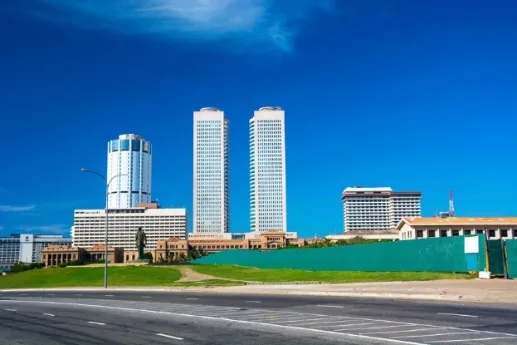
Day-by-day itinerary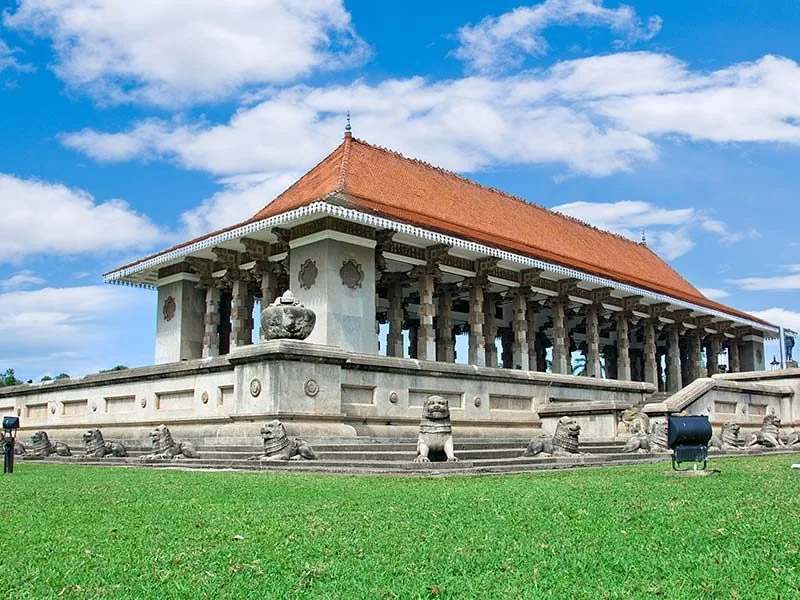 Your Volata Travels driver-guide is waiting in the arrivals hall at the airport with a name board, and the transfer into Colombo takes roughly an hour. Once you have checked in and rested after the flight, the capital makes an easy first outing, because most of what is worth seeing sits within a short drive of each other. A city tour usually threads together the Fort district, where colonial-era buildings still line the streets, the old parliament building beside the sea, and Independence Square with its memorial hall. Galle Face Green is where Colombo comes out at sunset to fly kites and eat snacks, and nearby Viharamahadevi Park and the island's main museum give you shade and some background on the island's story. Your guide can also include places of worship from each of the main faiths: a Buddhist temple such as Gangaramaya, the red-and-white Jami Ul-Alfar mosque, a Hindu kovil and a church. Pettah's bazaar lanes are lively if you like crowds, and there is time for shopping if you want a first look at local handicrafts. Keep the evening quiet. Tomorrow is the first long drive, so an early night is the best way to start the circuit. Accommodation Fairway Colombo or similar Included Activities
Landmarks
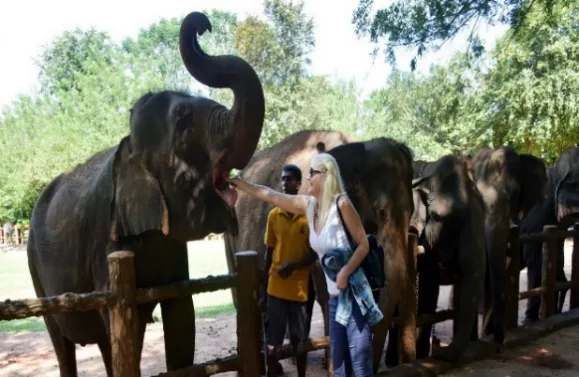
 This is the first of the long road days, so you leave Colombo in the morning and aim for the elephant orphanage at Pinnawala, about an hour and a half away on the main road towards Kandy. In all, the journey to Sigiriya is roughly four hours of driving, with the orphanage visit in the middle making a pleasant break. The orphanage was founded in 1975 by the Wildlife Department on a twenty-five acre coconut estate beside the Maha Oya river. It was set up to give a home to orphaned and injured elephants found in the jungle, and the idea has always been to keep conditions as close to natural as possible. The exception is feeding for the youngest animals: calves under three years old are still given bottles of milk by the keepers, which is a sweet thing to watch from the rail. Twice a day the whole herd is led down the street to the river, and this is the moment to be there. Adult elephants wade in, spray themselves with their trunks and roll about in the shallows while calves splash around the edges. Allow two hours or a little more, wear shoes that can get muddy, and follow the keepers' instructions about keeping your distance. After lunch the scenery changes as you leave the coconut belt behind. Paddy fields, small reservoirs and the first rocky outcrops of the dry zone slide past, and by late afternoon you reach Sigiriya, where you stay for two nights. There is nothing planned for the evening, so use it to unpack, swim if your hotel has a pool and eat when you like. Tomorrow begins early. Meals Breakfast Accommodation Amaya Lake or similar Included Activities
Landmarks
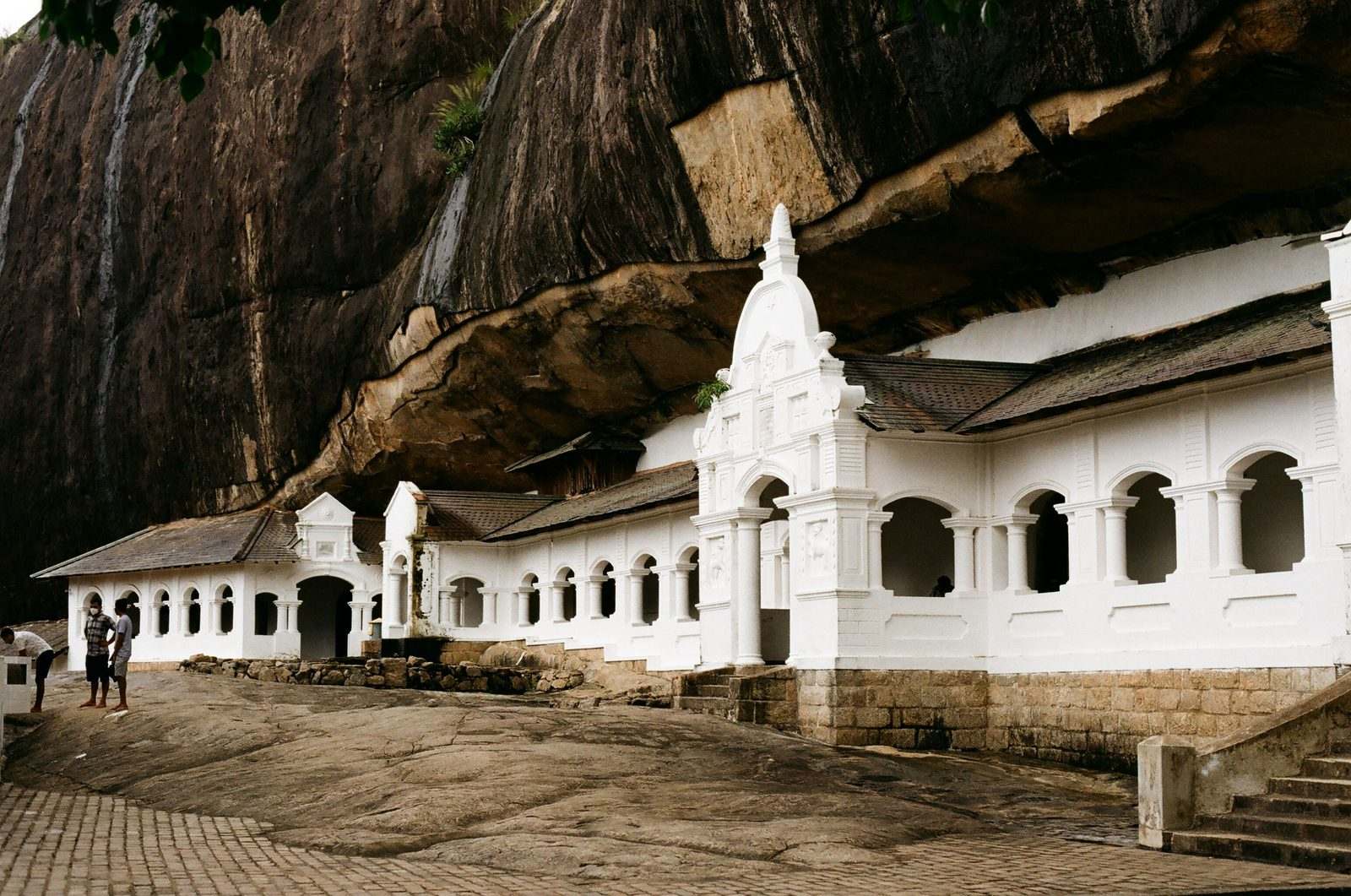 Breakfast is early, because the best hours at Sigiriya are the cool ones. The rock rises roughly 200 metres from the forest floor, and locals sometimes call it the eighth wonder of the world. In the fifth century King Kashyapa chose this lump of stone for his palace, and the approach still shows how carefully he planned it. You begin in the symmetrical Water Gardens, with their pools and channels, then climb through boulder-strewn terraces to the sheltered gallery that holds the painted maidens, whose colours are still clear. Beyond them runs the Mirror Wall, and further up two huge stone paws mark where a lion-shaped gateway once stood. From there it is about 1,200 steps to the top, where the foundations of the palace spread across the summit and the view stretches over forest, lakes and distant hills. Allow around three hours, carry water, and take your time on the narrow metal stairs. By midday the heat has built, so your driver-guide takes you to lunch and a rest before the afternoon visit to Dambulla, a short drive away. Here a long rock face towers about 160 metres above the plain, and under its overhang sit five cave temples that have been used for worship for over two thousand years. The paintings on the ceilings tell the story of the Buddha's life in dense, bright patterns, and the caves hold 153 statues of the Buddha, three of kings and four of gods. UNESCO listed the complex in 1991. A flight of steps leads up from the road, and you remove your shoes before entering, so wear socks you do not mind having on warm stone, and cover your shoulders and knees. Return to Sigiriya for a second night. Your legs will probably be ready for dinner and bed. Meals Breakfast Accommodation Amaya Lake or similar Included Activities
Landmarks
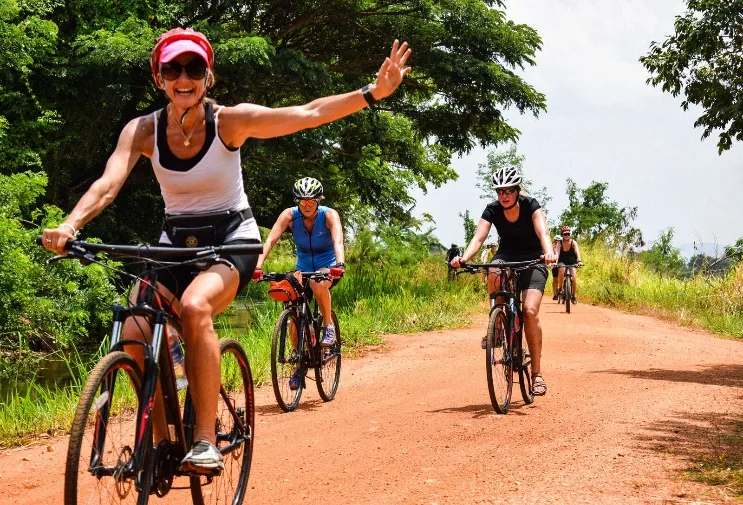 After breakfast you head for a village on the edge of the Sigiriya countryside, and the morning is spent at the pace of rural life rather than at a monument. A bullock cart takes you along tracks between paddy fields, and a slim wooden outrigger canoe carries you over the village tank, quiet except for birds. Your hosts then show you a chena plot, the traditional method of growing crops on cleared forest land, and take you to a family kitchen where rice and curries are cooked over a wood fire. You help with the cooking if you wish, and then sit down to eat what you have helped to prepare. Afterwards the road leads north-west to Anuradhapura, about one and a half to two hours away. This was the island's first great capital and a centre of Theravada Buddhism for many centuries. UNESCO inscribed the sacred city in 1982, and it is still very much alive: pilgrims dressed in white arrive to leave flowers and light lamps. The most revered spot is the Sri Maha Bodhi, a fig tree grown from a cutting of the tree under which the Buddha is said to have reached enlightenment and planted in the third century BC. Close by stand the colossal white domes of Ruwanwelisaya and Jetavanaramaya, each one a pilgrimage site as well as a feat of ancient building. Dress modestly in Anuradhapura, with shoulders and knees covered, and expect to take off your shoes at the shrines, so a pair of thin socks helps on sun-baked paving. Aim to see the main monuments in the softer light of late afternoon, then settle into your hotel for the night. Meals Breakfast Accommodation Rajarata Hotel or similar Included Activities
Landmarks
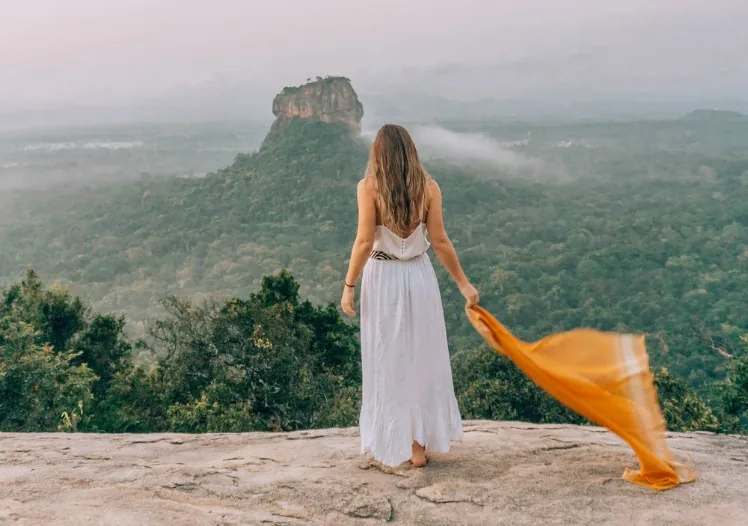 Today you leave the first capital for the second. After breakfast you drive east to Polonnaruwa, the medieval seat of power from the eleventh to the thirteenth century and another UNESCO site. The story starts with King Vijayabahu, who drove out the Chola invaders in 1070 and reunited the kingdom under local rule. His grandson Parakramabahu, who reigned from 1153 to 1186, turned the city into a showpiece and built a network of reservoirs so large that one of them is still called a sea. The rice those tanks made possible became the basis of the kingdom's strength. The ruins lie across flat, shaded ground beside that great reservoir, so walking between groups of them is easy. Your guide leads you to the circular Vatadage, ringed by carved steps and guardian stones, then to the walls of the royal palace, where the thickness of the brickwork hints at a building that once rose several storeys. The finest moment is Gal Vihara, where huge Buddha figures, seated, standing and reclining, are carved from a single granite face. Their calm expressions tend to quieten even the busiest group. Bring a hat, sunscreen and plenty of water, as shade is limited between sites. After a late lunch you return towards Habarana and on to the Sigiriya area. You have already climbed the fortress, so this evening you view it from outside. Pidurangala is a smaller rock beside it, with a path that passes a little temple and finishes with a scramble over boulders. From the top you look straight across at the fortress catching the last of the sun. Sturdy shoes matter here, and a torch helps for the walk down. If you want to climb the fortress steps again instead, your guide can arrange it. Then you drive back to Polonnaruwa, roughly an hour to an hour and a half, for the night. Meals Breakfast Accommodation Hotel Sudu Araliya or similar Included Activities
Landmarks
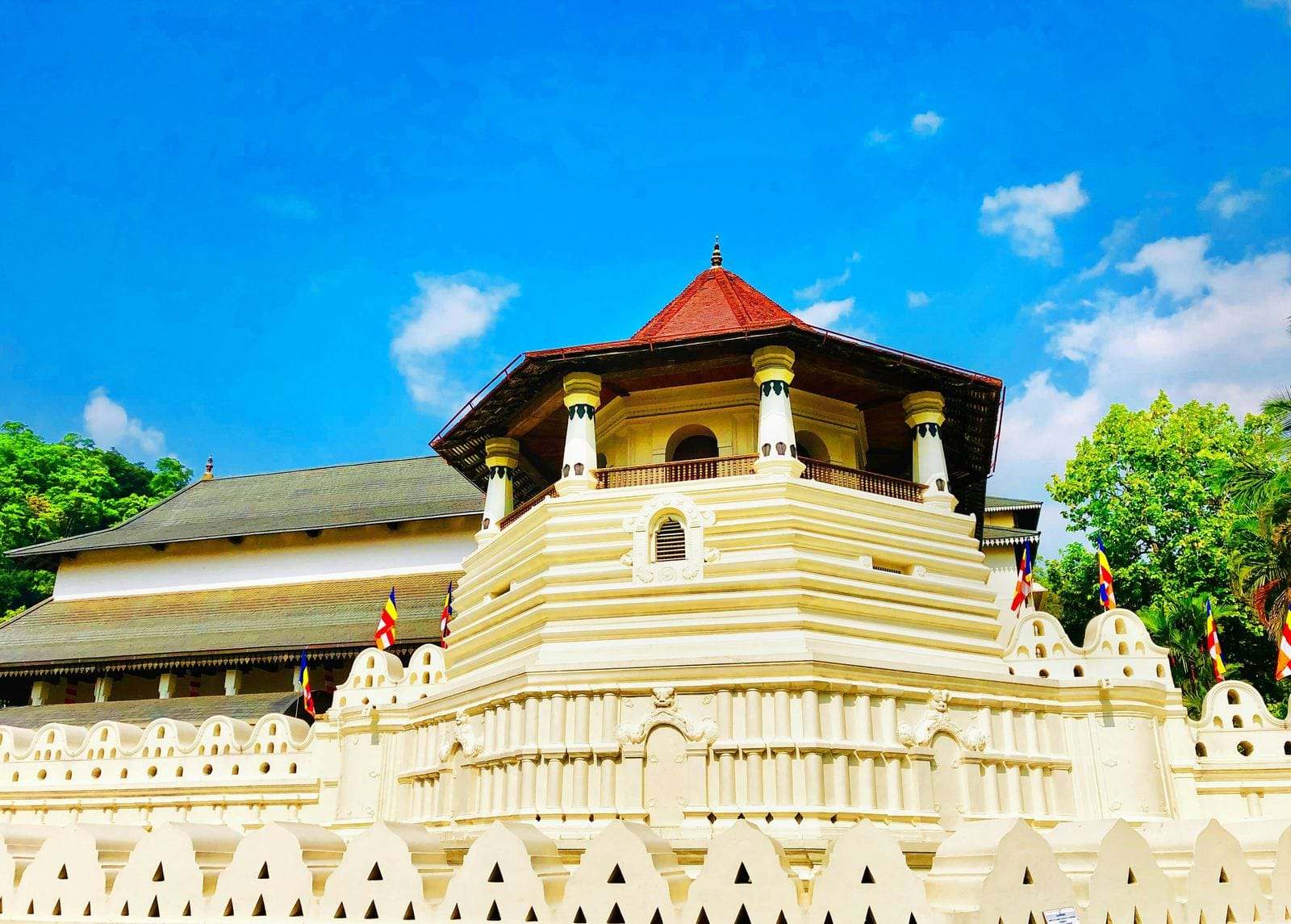
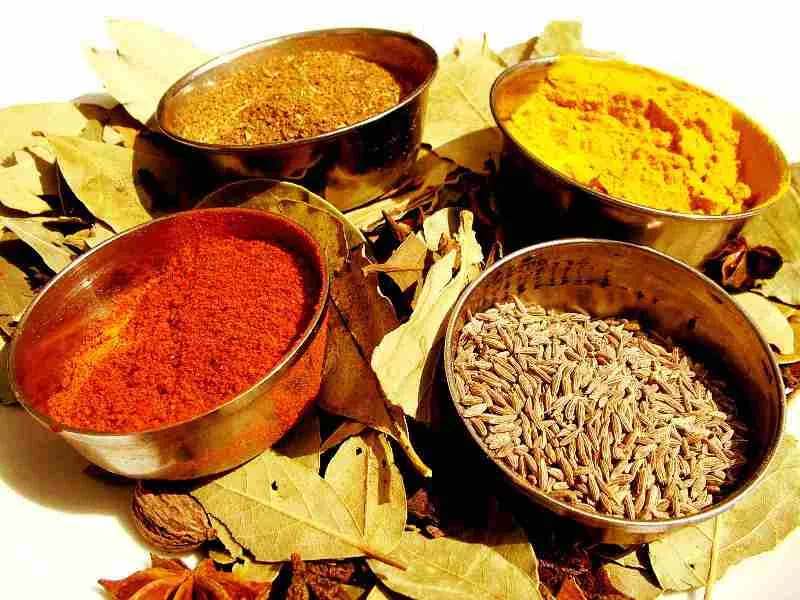 Today you leave the dry plains for the hills. After breakfast you drive south through Dambulla and on to Matale, with Kandy about two and a half to three hours beyond the Dambulla turning. Matale is a market town where the paddy fields give way to terraced gardens, and it holds some of the best spice gardens on the island, only about 25 kilometres from Kandy. A guide leads you through the plots and introduces the plants one by one: pepper vines wound around their supports, cinnamon, cloves, cardamom, nutmeg and vanilla. You see how each spice is grown and prepared, and learn which ones serve as herbal remedies in Ayurvedic practice. A local cooperative of farmers runs the nearby processing unit, so prices are set fairly, and there is a shop if you would like to take something home, but nobody expects you to buy. You reach Kandy in the afternoon. The last royal capital of the Sinhalese kings sits around a small lake, ringed by hills, and has been a UNESCO World Heritage city for decades. Its heart is the Temple of the Sacred Tooth Relic, which houses a relic of the Buddha. According to tradition, the tooth was smuggled into the island in the fourth century, hidden in the hair of a princess from Orissa, and it has been revered ever since as the country's most prized object. Dress modestly and leave your shoes at the entrance. Photographs are best taken outside the inner shrine. At five o'clock a cultural performance begins in town and runs for about an hour. Drummers, acrobats and dancers in heavy, glittering costumes take the stage, and the programme usually finishes with fire-walking. It is a lively way to end the day. Meals Breakfast Accommodation Mahaweli Reach Hotel or similar Included Activities
Landmarks
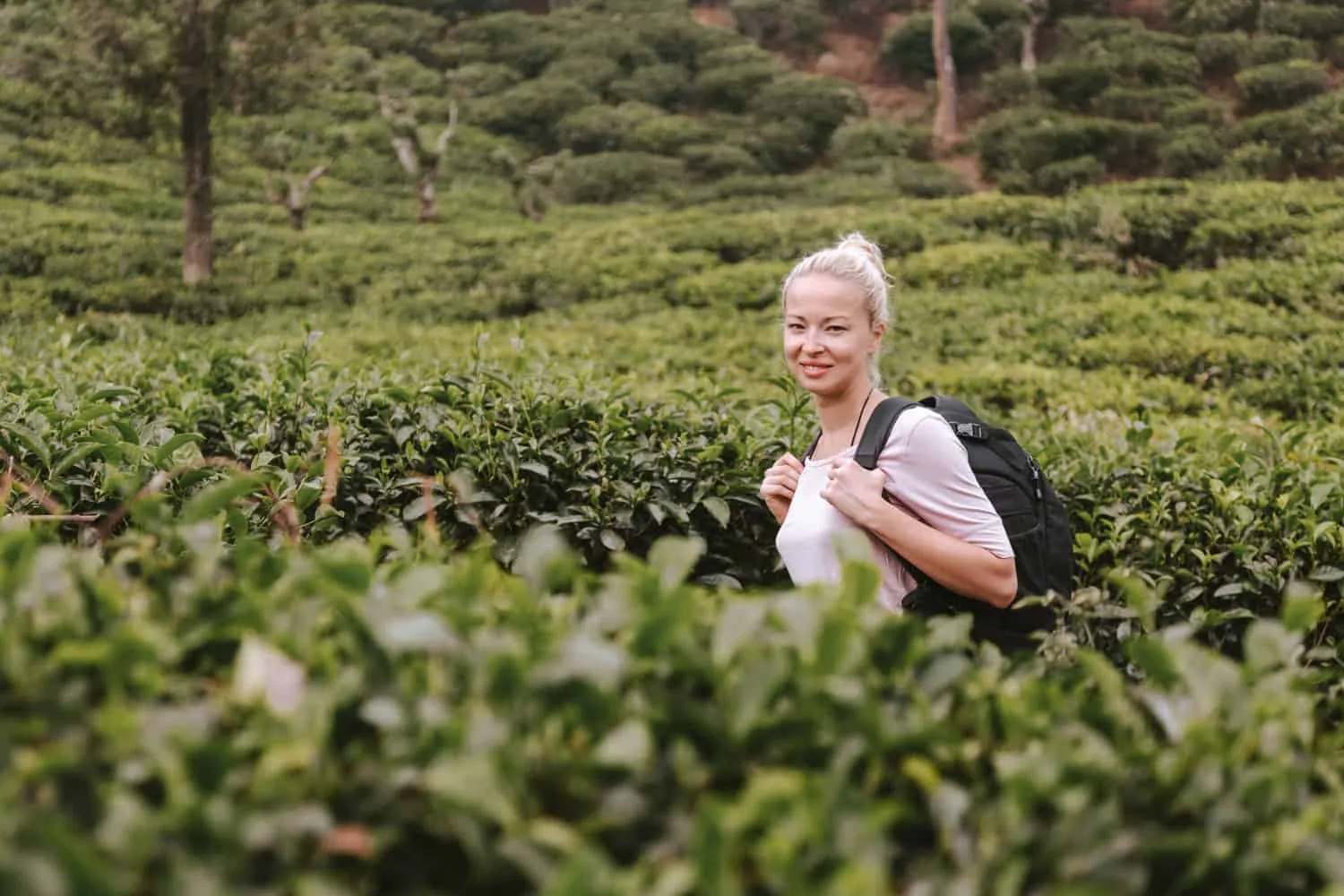 Today is a gentle one, built around two indoor and outdoor visits with time to rest between them. After breakfast you head to a gem museum and workshop in Kandy. Sri Lanka has been famous for its sapphires since antiquity, and the island produces rubies, moonstones, cat's-eye and many other stones as well. The museum explains the geology behind the deposits, shows a reconstruction of a traditional gem mine and plays a short film that follows a stone from the ground to the jeweller's bench, where it is cut and set in gold, silver or platinum. A showroom is attached, but there is no obligation to buy, and your guide will happily wait while you look. The middle of the day is free. Walk beside the lake, ask your driver-guide for a lunch recommendation or simply rest at the hotel after the busy days behind you. In the late afternoon you drive about five kilometres west of the centre to the Royal Botanic Gardens at Peradeniya. The gardens occupy a loop of the Mahaweli river, about 460 metres above sea level, and they are the oldest formal gardens on the island. Their history is long: a queen is said to have enjoyed the site in the fourteenth century, a Kandyan prince lived here in the eighteenth, and in the early nineteenth century the British developed it into one of the great botanic gardens of the empire. During the Second World War it even served as a regional headquarters for the Allied forces. Today more than 4,000 plant species grow here, and the highlights include the orchid house, the spice garden, long avenues of towering trees and a fine palm collection. Roughly two million visitors come each year, but the lawns are wide and you can easily find a quiet bench. Return to Kandy for a relaxed evening. Meals Breakfast Accommodation Mahaweli Reach Hotel or similar Included Activities
Landmarks
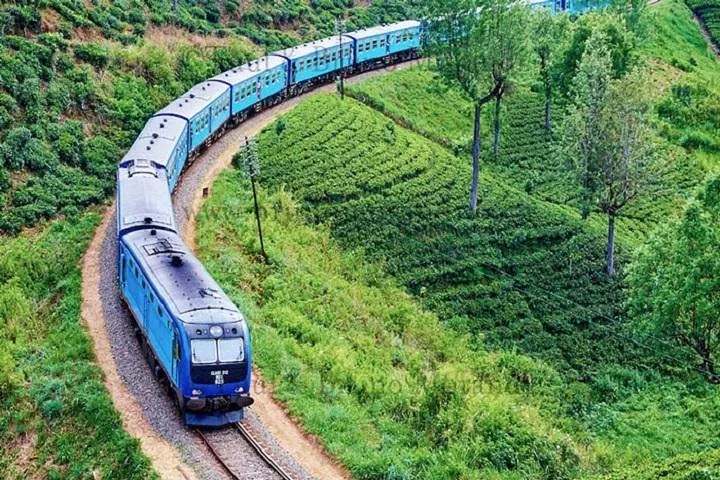 After breakfast the road climbs into the heart of tea country, and the whole day follows a green staircase of terraces. The drive from Kandy to Nuwara Eliya takes roughly three to four hours by road, but there are plenty of reasons to stop on the way. The first is a working tea estate and factory. Tea has been the economic backbone of the hills since the British realised that the climate around Kandy and further up suited the crop. You follow the leaf through each stage: plucking, withering, rolling, oxidising, drying and grading. At the end you sit with a cup of freshly made Ceylon tea and look out over the terraces. Further on, the Ramboda Falls tumble down in several tiers beside the road, and above them a bright Hindu temple is dedicated to Hanuman. It is linked with the Ramayana and houses an 18-foot statue of the god. You arrive in Nuwara Eliya, at about 1,900 metres, in the middle of the afternoon. The town earned the nickname Little England for its colonial bungalows, trimmed lawns and flower beds, and the air is noticeably cooler. After checking in, your guide takes you through the market to see how local people shop for vegetables and spices, and out to Hakgala Botanical Gardens on the slope of a rock. Roses, tree ferns and orchids thrive in the mountain air, and monkeys and blue magpies often turn up among the trees. The nearby Seetha Amman Temple is a colourful shrine associated with the Ramayana story. If there is time before dusk, Gregory Lake and Victoria Park make a pleasant stroll. Evenings are cold, so pack a jumper or fleece. Meals Breakfast Accommodation Araliya Green Hills or similar Included Activities
Landmarks
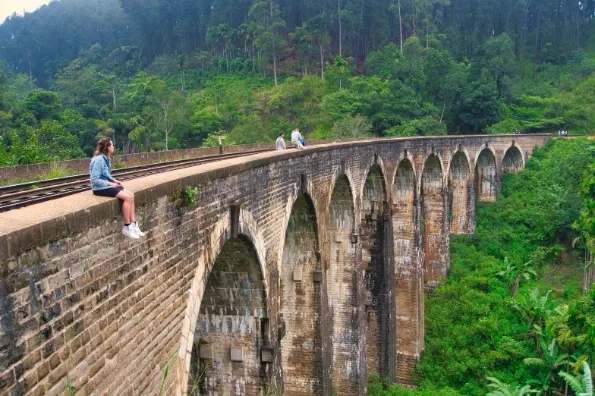
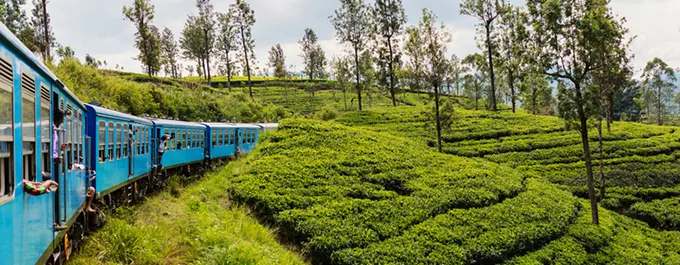 Today's journey is the one many people remember longest. After breakfast you are driven to Nanu Oya, the station that serves Nuwara Eliya, where you board the scenic train to Ella. The line was laid by the British in the 1860s to carry coffee and later tea from the hill estates, and it still follows the original tracks. Over roughly three to four hours the carriages creep through tea fields, cloud forest and tunnels, and past waterfalls, with open doors and windows from which to lean out. Your driver-guide travels ahead by road with your luggage and meets you in Ella. Train tickets are bought separately and seats have to be booked in advance, so tell us early; if no seats are available, the same stops can be made by road. Ella is a small, relaxed village in a gap in the hills, with views that open all the way to the plains. Once you have checked in and had something to eat, the afternoon is for two of its best-known sights. Ravana Falls drops about 82 feet from a rounded rock beside the main road, inside a small sanctuary. At its fullest, after rain, it fans out like a drooping areca flower, while in the dry season it shrinks to a thin veil, so the timing of your visit matters. According to local legend, the water is connected with King Ravana of the Ramayana. The Nine Arch Bridge, near Demodara, was commissioned under British rule in 1921 and built from stone blocks and cement, without steel reinforcement. Its arches curve across a jungle valley, and the best moment is when a train crosses. Your guide will tell you the likely times, so you can be in position well before. Return to the village for dinner. Meals Breakfast Accommodation Te Dalu Resort & Spa or similar Included Activities
Landmarks
 Your second night here makes today the slowest of the whole expedition. Nothing needs to be done early, so sleep in, take breakfast on a terrace if your hotel has one and let the morning find its own shape. If you would like a walk, Little Adam's Peak is the classic choice. The path starts at the edge of the village and climbs gently through tea bushes to a ridge, usually in about an hour, with a view across the valley and down the Ella Gap towards the plains. It is much easier than its name suggests, and the best light comes in the early morning or the late afternoon. Bring water and a hat, and wear shoes with grip, since the path can be slippery after rain. More energetic guests sometimes consider Ella Rock, a longer and steeper hike that is best done with a local guide, but it takes most of a morning and is entirely optional. Ella is also a place to simply sit. The village has a string of cafes and small restaurants, and it is easy to spend an hour over a pot of tea. If a train is due, the platform is a pleasant place to watch the carriages come and go. You can also revisit the Nine Arch Bridge in different light or return to Ravana Falls if the first visit was rushed, as both are only a short ride away. Plan on an early dinner and a good night's sleep, because tomorrow the landscape starts to flatten and the wildlife begins. Meals Breakfast Accommodation Te Dalu Resort & Spa or similar Included Activities
Landmarks
 After breakfast you leave Ella and begin the descent from the hills. The drive to Udawalawe takes about two and a half hours without stops, and there are three good reasons to take longer. First, the road passes Ravana Falls again. If the light was poor the day before, or you simply liked the place, this is a chance to stop for a few minutes. The second stop is Buduruwagala, near the town of Wellawaya. A British surveyor found this group of seven carved figures in the early twentieth century, though local people had known the site for centuries. The figures are cut into the east-facing face of a rock, and the name Buduruwagala roughly means Buddha images in stone. It is a quiet place with few visitors, and its mix of carved Buddha and attendant figures is unlike anything else on the route. In the afternoon you reach the Udawalawe wildlife park, where open grassland meets a large reservoir. The park was created to protect the catchment of the Walawe river and to offer a refuge to the elephants displaced when that basin was developed. Today it is one of the most visited parks on the island, and it is rewarding because elephants are seen here in good numbers almost all year, often as family herds with calves. You also have a good chance of spotting buffalo, deer, crocodiles and many water birds. Your jeep safari usually lasts around three hours, and the late-afternoon light is excellent for photographs. Park fees and the jeep are paid separately. Spend the night near the park. If you wish, ask about the Elephant Transit Home, where orphaned calves are looked after before being released. Meals Breakfast Accommodation Comfortable 4-star hotel in Udawalawe or similar Included Activities
Landmarks
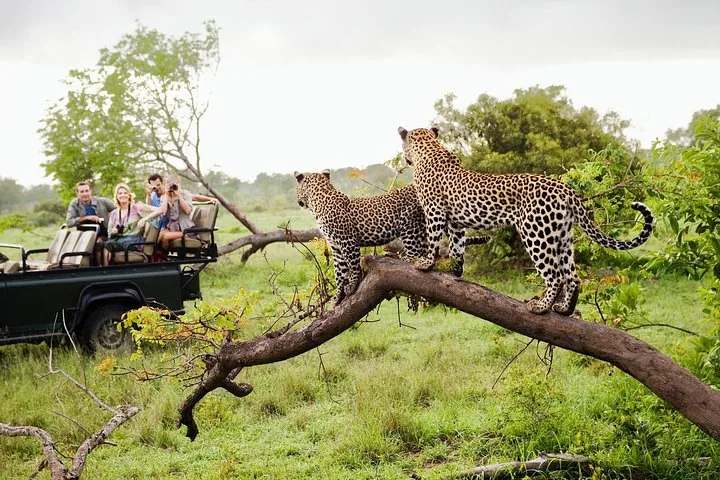 This is the early start you have been waiting for. Your driver-guide collects you in the dark and you travel south towards Yala with a breakfast pack from your hotel, because the park is at its best at first light. Safaris leave around dawn in open 4x4 jeeps with a tracker who knows the tracks and the animals' habits. Yala has one of the densest populations of wildlife on the island and is often described as the finest safari destination in the country. It is perhaps best known for leopards, which here are among the most densely concentrated anywhere, though seeing one depends entirely on luck and patience. Elephants are a regular sight, and you may also meet sloth bears, crocodiles on the lake edges, peacocks displaying in the open and dozens of bird species. Wildlife sightings are never promised, but a morning of around three hours gives you a good chance of at least several memorable encounters. Wear muted colours, bring a hat, binoculars and a light layer for the cool start, and expect a dusty, bumpy ride. Entrance and jeep fees are paid separately, and the park has an annual closure, which we check when planning your dates. By late morning you are back at your hotel in Tissamaharama, ready for a shower and a rest. The town sits beside the ancient Tissa Wewa reservoir, with a gleaming white stupa at its centre, and an evening stroll along the water is pleasant once the heat has gone. If you have energy left, ask about a short trip to Kataragama, a pilgrimage town sacred to Buddhists, Hindus and Muslims, where an evening ceremony is held at the temple on the river bank. Meals Breakfast Accommodation Chaarya Resort & Spa or similar Included Activities
Landmarks
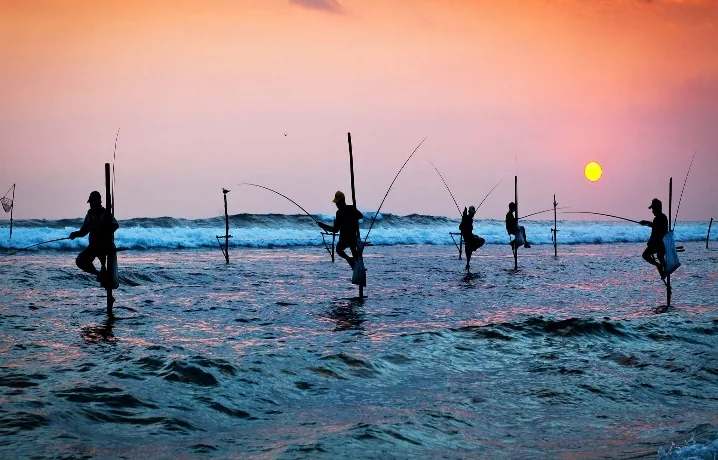 Today you say goodbye to the wild south-east and head for the sea. After breakfast you drive about three hours to Galle, following the coast for much of the way. This stretch is dotted with small attractions, and if you have energy you can ask for optional stops: the Hummanaya blowhole near Dickwella, where the swell forces a jet of seawater through a rock vent, and the stilt fishermen off Weligama, who perch on poles in the surf. Each takes around half an hour, and the blowhole is at its best when the sea is rough. Galle Fort is the afternoon's main event. A UNESCO site, it was begun by the Portuguese in 1588 and greatly strengthened by the Dutch from 1649 onwards. The old walled town was a busy spice port for more than two centuries before passing to the British. Today it is a lived-in neighbourhood, and the best way to see it is on foot. Climb onto the ramparts and walk along the sea wall, past the lighthouse and the clock tower, then drop down into narrow lanes of boutiques, galleries, cafes and old Dutch houses with deep verandahs. The Dutch Reformed church, known as the Groote Kerk, is one of the quieter landmarks. A good rule is to give the Fort at least a couple of hours and to stay for the late light, when the walls turn gold. Then it is a short drive of about 45 minutes to Mirissa, a crescent of golden sand with a laid-back feel. Check in, walk down to the beach and choose a table facing the sunset. Whale watching trips leave early in the morning from here, usually from about November to April, but today there is only time for the view. Meals Breakfast Accommodation Mandara Resort or similar Included Activities
Landmarks
 Your last morning is for a final swim, a slow breakfast or a walk along the sand at Mirissa, depending on your flight time. Your driver-guide will work backwards from your departure to decide when to leave, and since the journey north to the airport takes roughly four hours, an early start is normal. The coast road passes Bentota on the way. If time allows, a short stop beside the river there is a nice way to say goodbye to the island, with a coffee or a coconut as the boats go by. Otherwise the drive is simple and direct, and your driver-guide helps with your luggage at the departures hall. Thank you for travelling around the whole island with us. Meals Breakfast Included Activities
Landmarks
Route mapWhere you'll stayThese are the hotels we plan to use. If one of them is full on your dates, we book another hotel of the same standard (“or similar”) and tell you its name before you travel. Fairway Colombo or similarColombo 1 night · Bed and breakfast · or a similar 4-star hotel Amaya Lake or similarSigiriya 2 nights · Bed and breakfast · or a similar 4-star hotel Rajarata Hotel or similarAnuradhapura 1 night · Bed and breakfast · or a similar 4-star hotel Hotel Sudu Araliya or similarPolonnaruwa 1 night · Bed and breakfast · or a similar 4-star hotel Mahaweli Reach Hotel or similarKandy 2 nights · Bed and breakfast · or a similar 4-star hotel Araliya Green Hills or similarNuwara Eliya 1 night · Bed and breakfast · or a similar 4-star hotel Te Dalu Resort & Spa or similarElla 2 nights · Bed and breakfast · or a similar 4-star hotel Comfortable 4-star hotel in Udawalawe or similarUdawalawe 1 night · Bed and breakfast · exact hotel confirmed at booking Chaarya Resort & Spa or similarTissamaharama 1 night · Bed and breakfast · or a similar 4-star hotel Mandara Resort or similarMirissa 1 night · Bed and breakfast · or a similar 4-star hotel What's included
What's not included
Pickup & drop-offPickup: Your Volata Travels driver-guide meets you in the arrivals hall at Bandaranaike International Airport (CMB), Katunayake, with a name board. Pick-up from a hotel in Colombo or Negombo can also be arranged. Drop-off: Transfer to Bandaranaike International Airport (CMB) for your departure flight, with the timing planned around your flight. Important informationItinerary order and overnight stops can be adjusted to fit your dates and pace — this is a private tour built around you, not a fixed departure. Cancellation policyAll cancellations must be received in writing by your Volata Tour Consultant. 19.1 Unless otherwise specified in your quotation, the following cancellation terms will apply to your booking: 19.1.1 Cancellations received between the date of booking and 61 days prior to departure will result in the loss of the deposit. 19.1.2 Cancellations received 60 – 46 days prior to departure will be subject to a cancellation charge of 25% of the tour price. 19.1.3 Cancellations received 45 – 29 days prior to departure will be subject to a cancellation charge of 50% of the tour price. 19.1.4 Cancellations received 28 – 15 days prior to departure will be subject to a cancellation charge of 75% of the tour price. 19.1.5 Cancellations received 14 days or less prior to departure will be subject to a forfeiture of the entire tour price. 19.2 Cancellation of airline tickets will be subject to the refund policy of each individual airline and may be greater than the percentages above particularly when low cost/net-based fares are used. 19.3 The purchase of special event tickets is subject to the refund policy of each individual event. Please refer to the specific event policy for details. 19.4 Volata reserve the right to charge for financial penalties, fees and losses incurred in excess of your cancellation fee as a result of cancellation.... What travellers say5.0 average from 7 customer reviews JT Jason Tan, Malaysia Excellent Sri Lanka ExperienceOur Sri Lanka tour was very enjoyable from beginning to end. The airport pickup was on time, the vehicle was clean and comfortable, and our driver was friendly and knowledgeable. We especially enjoyed Kandy, Nuwara Eliya and Ella. The hotels were comfortable and the overall program was easy to follow. The airport pickup was smooth and the team communicated the program clearly. Every day had something different, and we particularly enjoyed the scenic drives and local experiences. DK Daniel Kim, South Korea The trip was smooth and enjoyable. Our guide was punctual, friendly, and full of useful information. MJ Mikkel Jensen, Denmark Our holiday was relaxing and well managed. The itinerary had a comfortable pace and made it easy to enjoy the destinations without worrying about the arrangements. Transport was pleasant throughout, including on the longer drives. AR Arjun Rao, India Very Good Travel ServiceVery smooth tour from airport pickup to the final departure. Our driver was friendly and punctual. The hotel was comfortable and the daily program was easy to follow. We appreciated having a private vehicle because it gave us flexibility with sightseeing and rest stops. A Amex, France We loved the combination of wildlife and cultural sightseeing. The guide was attentive, and the experience felt welcoming and well planned. TS Thomas Schneider, Switzerland Comfortable and Well OrganizedWe enjoyed Kandy, Nuwara Eliya and Ella very much. The private driver made the journey easy. The airport pickup was smooth and the team communicated the program clearly. Every day had something different, and we particularly enjoyed the scenic drives and local experiences. AK Anna Kowalska, Poland Memorable Sri Lanka TripExcellent private tour and very comfortable transportation throughout Sri Lanka. The hotel was comfortable and the daily program was easy to follow. We appreciated having a private vehicle because it gave us flexibility with sightseeing and rest stops. You might also like      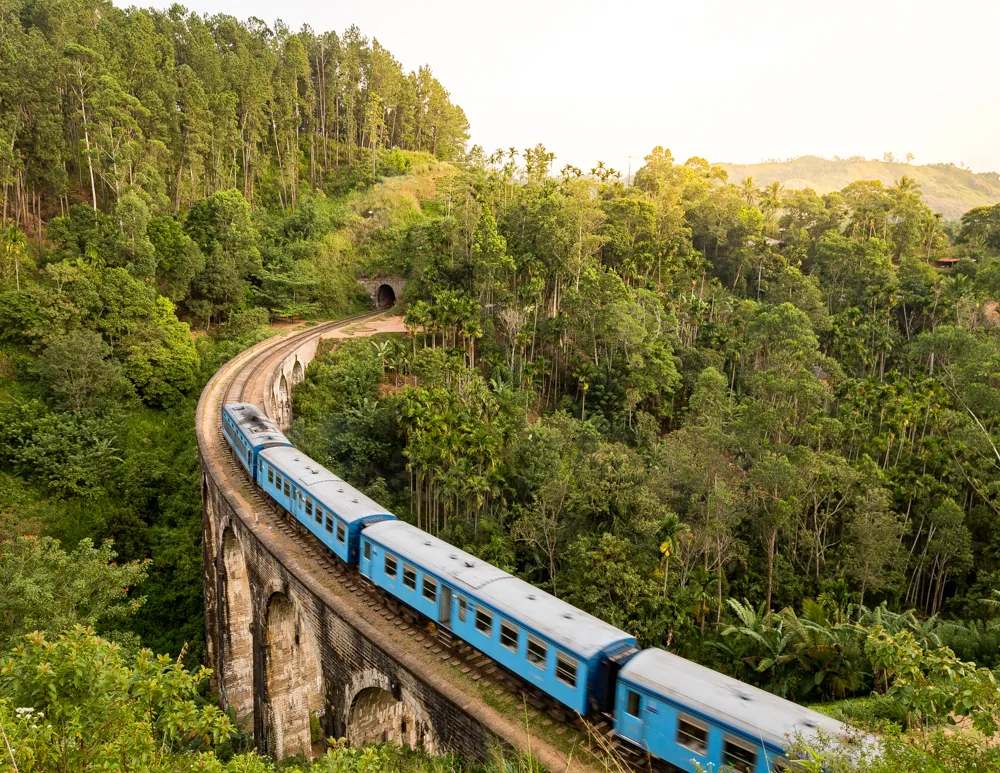 Ready to plan your Sri Lanka trip?Tell us your dates and interests — we'll put together a private itinerary within a day. |
Frequently Asked Questions
Is 14 days enough to see the best of Sri Lanka?
Yes, if you are happy with a full programme. Fourteen days lets you cover the cultural north, Kandy, the hill country, two wildlife parks and the south coast without rushing every day. You will spend a lot of time on the road, mainly on the transfer days, and the pace is more of an expedition than a holiday. If you would like more beach time, a longer version with extra coastal nights is easy to arrange.
What is the best time of year for this tour?
It works in most months because it crosses several climate zones. December to March suits the west and the hills best, while April to September suits the north and the safari parks. The shoulder months bring fewer visitors and greener scenery, though you may see some rain. Whale watching off Mirissa is usually possible from November to April, so mention it if that is a priority.
How much driving is involved?
Several days include three to four hours or more in the car, notably the day to Sigiriya, the climb from Kandy to Nuwara Eliya and the final transfer to the airport. We break each journey with real stops, such as the orphanage at Pinnawala, a spice garden, tea country and Galle Fort, so the time is part of the sightseeing. Your vehicle is air-conditioned, and you can ask for extra rest stops whenever you like.
How hard is the Sigiriya climb?
It is a moderate effort rather than a technical one. There are roughly 1,200 steps, some of them on narrow metal staircases, and the heat builds quickly, so going early helps. Most reasonably fit people manage it in around three hours, including breaks at the gardens and the frescoes. If you prefer a lighter option, Pidurangala gives a view of the fortress with a shorter walk, though it ends with a boulder scramble.
Do I have to take the scenic train to Ella?
No. The ride from Nanu Oya is one of the best parts of the hill country for many travellers, but it is optional. Tickets are bought separately and seats must be reserved in advance, so we recommend deciding when you book. If no seats are available, or you would rather skip it, your driver-guide takes the road instead and visits the same waterfall and bridge.
Are the safaris included in the programme?
The programme includes an afternoon jeep safari in Udawalawe and a morning safari in Yala, both led by experienced trackers. Park entrance fees and jeep charges are paid separately, and your guide explains the arrangements beforehand. No park can promise a sighting, but elephants are seen very regularly at Udawalawe and Yala has a strong reputation for leopards, so your chances are good.
What should I pack for the different regions?
Bring light, breathable clothes for the plains and the coast, plus a warm layer for Nuwara Eliya and early mornings on safari. Cover your shoulders and knees for temples, and wear shoes that are easy to take off. Good walking shoes help at Sigiriya and Pidurangala. A hat, sunscreen, insect repellent and a refillable water bottle are useful throughout the trip.
Is this tour suitable for children?
It suits children from about eight or ten years old who enjoy being outdoors and can cope with long drives. The elephant orphanage, bullock-cart ride, safaris and train journey are usually big favourites. The Sigiriya climb is the one demanding day, and younger children may prefer to stop at the lower terraces. Tell us the ages of your children when you enquire so we can pace the days sensibly.
Can I change the route or add beach days?
Yes. Every Volata Travels itinerary can be customised. Popular changes include swapping a night in the north for extra time at the coast, adding whale watching in Mirissa, or replacing the second night in Ella with a hike. Send us your preferred dates and interests, and we will adapt the route and confirm the revised programme and price.
What's included in the 14-day tour price?
Meet and greet at Bandaranaike International Airport; 13 nights in 4-star hotels (or similar), double or twin room sharing; a single room if you travel alone; Daily breakfast at your hotels (bed and breakfast); All transfers and sightseeing in a private air-conditioned vehicle; English-speaking driver-guide throughout the tour; Fuel, parking, driver accommodation and highway fees. The tour costs USD 1579 per person when two adults share a room, or USD 3009 for one traveller in a single room, for 13 nights / 14 days. These prices are valid for travel from 8 October 2026 to 30 November 2027.
What's not included?
International flights and the Sri Lanka ETA visa fee; Lunches, dinners and drinks (breakfast is included); Entrance fees and activity fees (Pinnawala Elephant Orphanage, Sigiriya Rock, Dambulla Cave Temple, village experience, Anuradhapura sacred city, Polonnaruwa ancient city, Pidurangala Rock, Temple of the Sacred Tooth Relic and cultural show and more); Optional tours and optional activities; Train tickets (if you choose the scenic train); Hotel supplements when you travel on 24 December and 31 December (New Year), and the Christmas supplement on 24 December; Tips, porterage and personal expenses; Early check-in and late check-out at hotels; Travel insurance and bank charges.
Is the price the same on 24 and 31 December?
Not quite. Hotels charge a compulsory supplement for the nights of 24 December (Christmas Eve) and 31 December (New Year's Eve), and these supplements are not included in the tour price. If your dates include either night, tell us when you enquire and we will confirm the supplement for the hotels on your route before you book.
Can I customize this tour?
Yes. The order of stops, the number of nights in each place, the hotels and the activities can all be adjusted to your dates, pace and budget — this is a private tour built around you, not a fixed group departure. Tell us what you would like to change and we will send a revised quote.
What is the cancellation policy?
All cancellations must be received in writing by your Volata Tour Consultant. Cancellations received up to 61 days before departure result in the loss of the deposit. Between 60 and 46 days before departure a charge of 25% of the tour price applies; between 45 and 29 days, 50%; between 28 and 15 days, 75%; and 14 days or less before departure the entire tour price is forfeited. Airline tickets follow the refund policy of each airline, and special event tickets follow the policy of each event. The full Terms & Conditions are at www.volatatravels.com/terms-and-conditions.