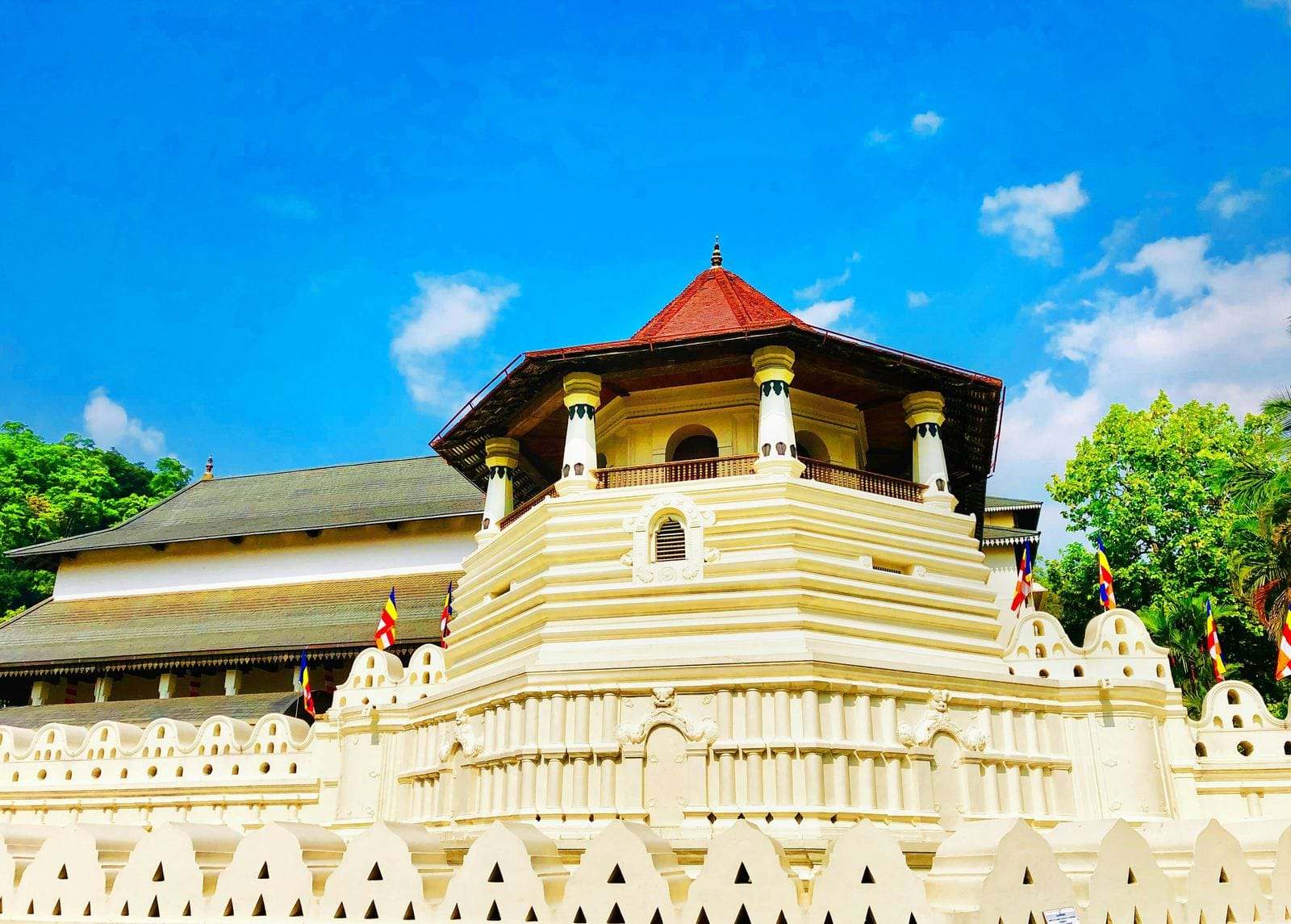
 Volata Travels & Events (PVT) LtdHot Line / WhatsApp: +94 71 694 6693 / +94 71 897 9909info@volatatravels.com | www.volatatravels.com |
431/1/1 Kandy Road, Dalugama, Kelaniya, Sri Lanka | General line: +94 11 227 3732 | SLTDA License: SLTDA/SQA/TA/02471 |
Private Tour · 4★ hotels Grand Sri Lanka Odyssey – 4-Star Hotels4-star hotel version: A fifteen-day private loop from Negombo to Mirissa: sacred cities, a restful east-coast stay at Trincomalee, Kandy, Ella, two safaris and Galle Fort. Private Tour · 4★ hotelsModerate intensityEnglish-speaking guide Tour priceFromUSD 1,567per person A 15 day Sri Lanka tour from Negombo to Mirissa follows the island's classic loop but adds something many itineraries leave out: two nights on the east coast at Trincomalee. This is a private, unhurried journey for travellers who want ancient cities, hill country, wildlife and the sea, and who prefer to do it all with one driver-guide from the first night to the last. Stay in 4-star hotelsThis version of the tour is booked in 4-star hotels for all 14 nights: Regenta Arie Lagoon in Negombo, Rajarata Hotel in Anuradhapura, a comfortable 4-star hotel in Trincomalee, Hotel Sudu Araliya in Polonnaruwa, Amaya Lake in Sigiriya, Mahaweli Reach Hotel in Kandy, Araliya Green Hills in Nuwara Eliya, Te Dalu Resort & Spa in Ella, Chaarya Resort & Spa in Tissamaharama and Mandara Resort in Mirissa, or similar hotels of the same standard. Rooms are double or twin, or single if you travel alone, with breakfast included each morning. The route, the sightseeing and your private driver-guide are the same as on the 3-star and 2-star version of this tour, so the difference is a more comfortable room, a better restaurant and pool, and in most places a quieter setting. Lunch, dinner, entrance fees, activity fees and train tickets are not included in the price. Who the 15 day Sri Lanka odyssey from Negombo to Mirissa suitsIt is made for couples, families with older children and friends who like variety. The days are full but the nights are well spaced, with doubled stays in Anuradhapura, Trincomalee, Kandy and Ella so you do not pack every morning. Compared with a shorter trip, it gives you a proper rest by the sea in the middle, which makes the second half of the journey much more enjoyable. Compared with a longer version, it keeps the beach to the east coast and the final night in Mirissa, so there is no extended resort stay. The shape of the trip is deliberate. The first half is spent in the dry north and east, where history and quiet beaches dominate. The second half climbs into the cool hills before dropping to the wildlife parks of the south, so you get warm days at the start, fresh air in the middle and a lively coast at the end. That sequence also means the most demanding day, the Sigiriya climb, falls after you have had a rest by the sea. From Negombo to Mirissa, night by nightYou begin in Negombo, a short drive from the airport, then spend two nights in Anuradhapura, two in Trincomalee, and one each in Polonnaruwa and Sigiriya. After two nights in Kandy, you stay in Nuwara Eliya, then two nights in Ella, followed by a night in Tissamaharama near Yala, and a last night in Mirissa. Breakfast is included each morning at your hotel. Lunch and dinner are your own choice, and your driver-guide is happy to suggest good local restaurants. Sacred cities, a quiet coast and big wildlifeThe northern chapter is about ancient places: a village morning with a bullock cart and a canoe, a day among the stupas and pilgrims of Anuradhapura, and the medieval ruins of Polonnaruwa. The east coast then gives a complete change. You visit the cliff-top temple of Koneswaram, snorkel around Pigeon Island in season and spend a day doing very little by the water. Back inland, you climb Sigiriya and see the cave temple at Dambulla at dusk, before the hills take over with spice gardens, the Tooth Relic temple, tea country and Ella. The finale is wildlife: elephants at Udawalawe, a dawn drive at Yala and the ramparts of Galle Fort at the end. Smaller moments fill the gaps, such as a pot of tea on a terrace in Nuwara Eliya, the smell of cinnamon in a Matale spice garden, or the sight of a blue train crossing the Nine Arch Bridge while you sit with a drink on the hillside. Comfort and your driver-guideYou travel in a comfortable air-conditioned vehicle with an English-speaking driver-guide who handles the logistics, explains every site and can adjust the day if the weather or your energy changes. Hotels are comfortable three-star and two-star properties. Entrance fees, jeep charges, boat fees and train tickets are paid separately, and your guide explains each one before you arrive. When to travelChoose your season for the coast you care about most. The east coast, including Trincomalee and Pigeon Island, is at its best from about April to September, as is the cultural north. The hills, the west and the south-west are usually driest from December to March. The safari parks are generally best in the drier months, and whale watching off Mirissa normally runs from November to April. The hills are cool in every season. Make it your ownEvery itinerary can be adapted. You might add a day in the hills, replace the east coast with more nights in the south, or move the train ride to a different day. Tell us your dates and interests, and we will propose the best version of this odyssey and send a quote. Tour highlights
Day-by-day itinerary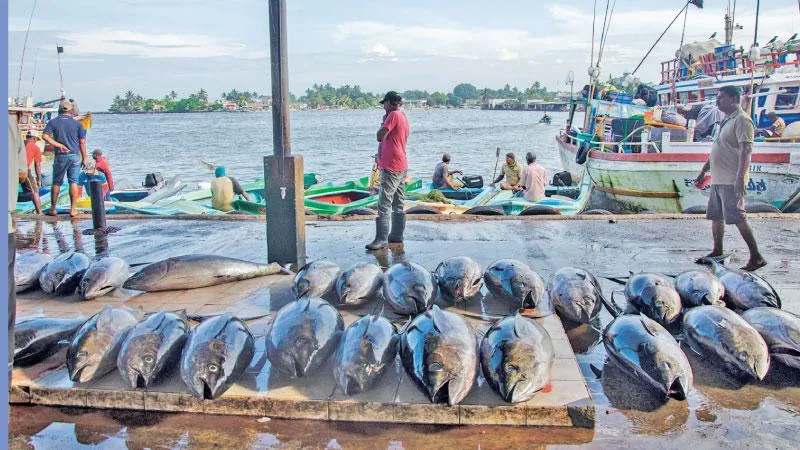 Your Volata Travels driver-guide is at the arrivals hall to greet you, and the transfer to Negombo takes only about 20 minutes, which makes it a kind first night if your flight lands late in the evening. Check in, shower and sleep. There is nothing on the programme until tomorrow. If you wake early or have time before you leave, Negombo is worth a few minutes. The fishing town lies on a lagoon and is known for its fish market, which starts to hum in the small hours and is busy for much of the day, with thousands of boats heading out to sea. You can also see remains of the Dutch canal and fort, and a surprising number of Catholic churches, which is why the town is sometimes nicknamed Little Rome. A walk along the beach at sunrise is a quiet way to meet the island. Accommodation Regenta Arie Lagoon or similar Included Activities
Landmarks
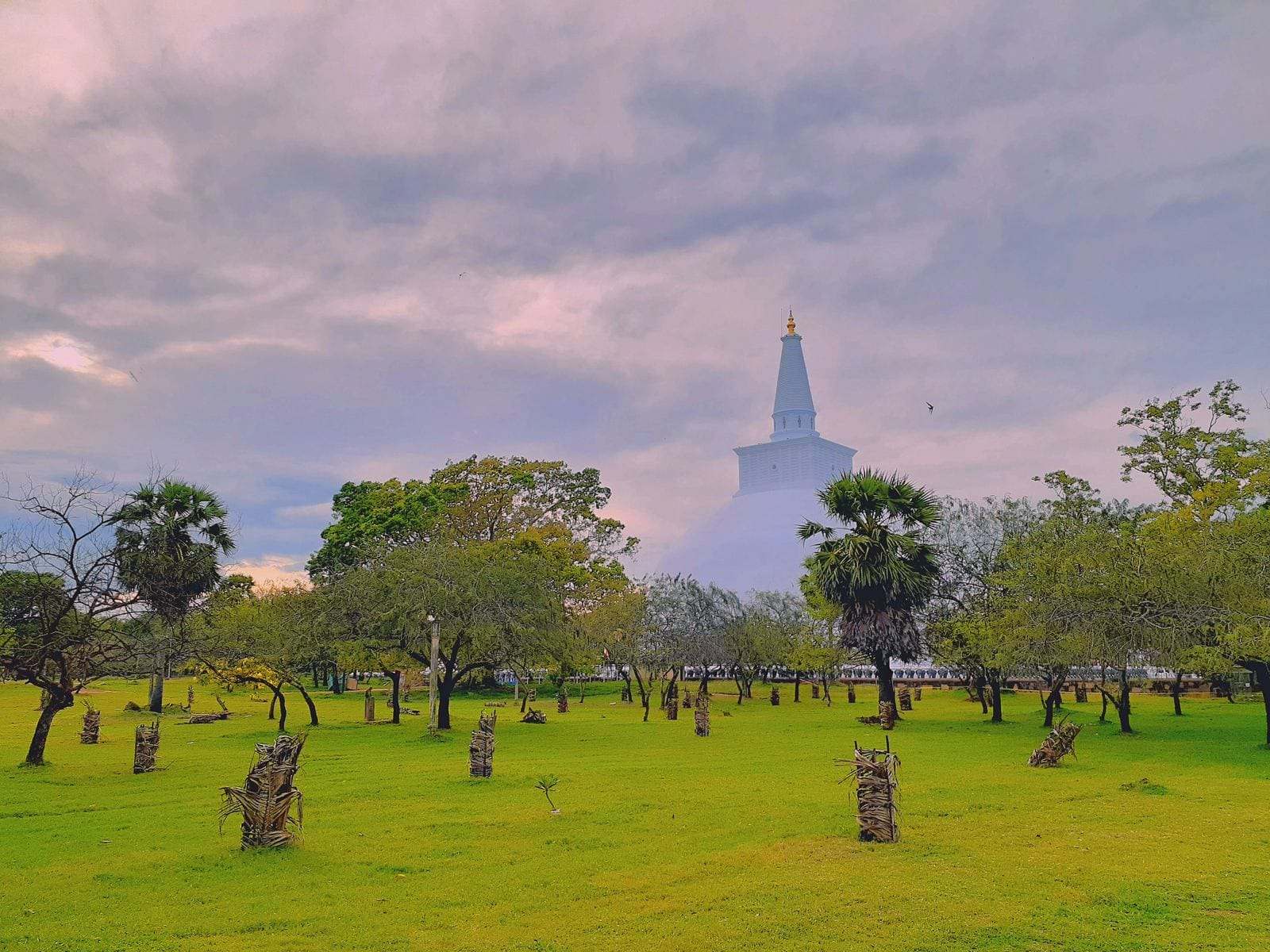 You leave Negombo in the morning for the longest drive of the opening days. The road takes you north-east for about three and a half to four hours as far as the Sigiriya and Dambulla area, and the scenery gradually moves from coconut country into the open, dry plains. Here you swap the vehicle for a more leisurely pace in a farming village. A wooden cart pulled by a pair of bullocks carries you through the paddy fields, and a slim outrigger canoe takes you across the water of the village tank, where egrets and cormorants stand in the shallows. A farmer shows you how a chena plot is worked, then you are invited to a family house to watch the cooking. Rice, lentils, vegetables and coconut sambol are prepared over an open wood fire, and you share the meal at the table. The visit is unhurried and gives an honest picture of everyday rural life. Afterwards you carry on for roughly one and a half to two hours to Anuradhapura, where you stay two nights. This was the first capital of the island and a centre of Buddhist learning for centuries, and now it is one of the oldest continuously inhabited cities in the world. Check in, rest and have an early dinner. Tomorrow starts at first light, when the city is at its most atmospheric. Meals Breakfast Accommodation Rajarata Hotel or similar Included Activities
Landmarks
Anuradhapura is best met early. Soon after sunrise you walk to the Sri Maha Bodhi, the fig tree that grew from a cutting of the original Bodhi tree and has been tended without a break since the third century BC. At this hour the courtyard is full of devotees in white who offer flowers, pour water at the roots and walk slowly around the railings. Join in at a respectful distance, and speak quietly. From there your guide takes you through the wider ruins of the city, which UNESCO listed in 1982. The giant white stupas are the most striking sight. Ruwanwelisaya rises from a raised platform above the surrounding trees, and Jetavanaramaya towers over everything else. Both are still places of worship, so you will see pilgrims at prayer around the base. Between them the park-like grounds hold old monastery foundations, moonstones and bathing pools, and your guide explains the role of each building. Anuradhapura was the heart of Theravada Buddhism on the island for many centuries, and what remains is only a part of what once covered a very large area. The practicalities matter here. Dress modestly, with shoulders and knees covered. Shoes are taken off at the shrines, and the paving can burn bare feet by midday, so wear socks and plan to see the most exposed sites in the morning. A hat and a water bottle are essential. If you still have energy after lunch, ask about Mihintale, a hill east of the city where Buddhism is said to have first reached the island. It is an optional add-on with a long staircase and a wide view. Otherwise rest at the hotel through the hottest hours and take an unhurried evening. Meals Breakfast Accommodation Rajarata Hotel or similar Included Activities
Landmarks
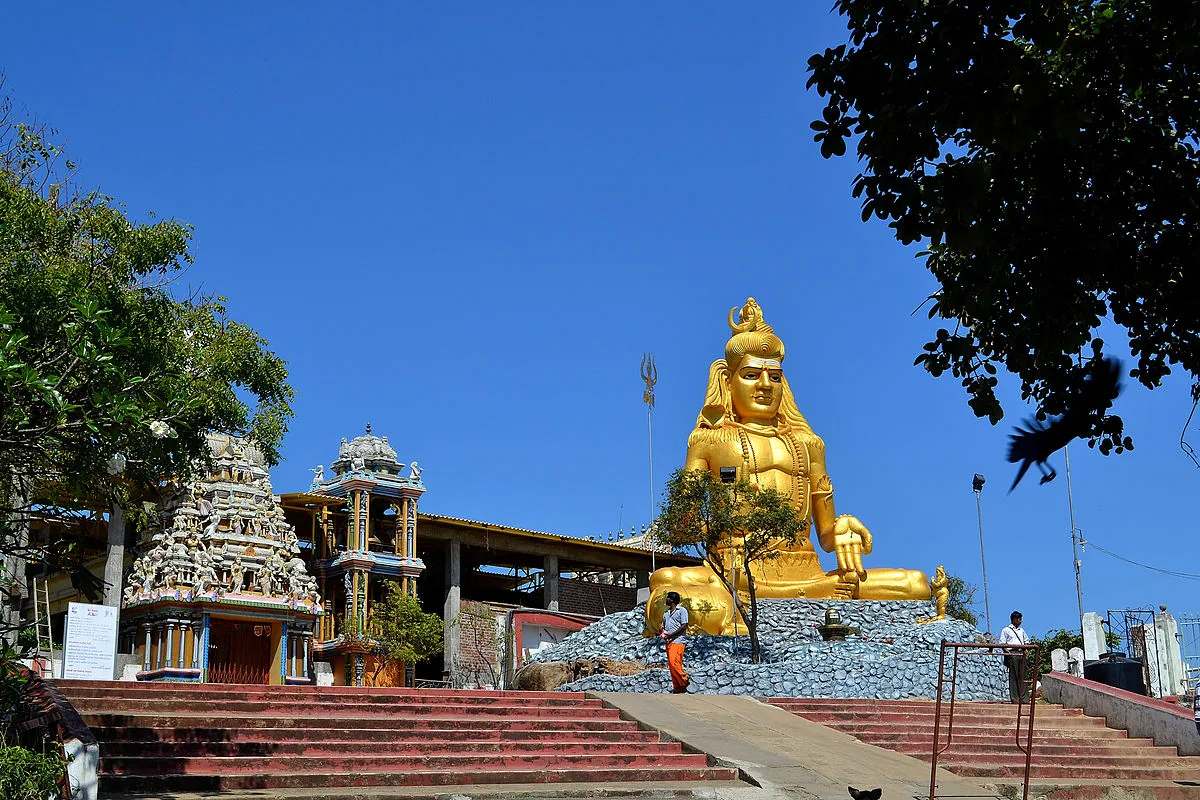 Today you cross to the other side of the island. After breakfast you leave the dry plains and drive for a few hours towards the east coast, where the landscape opens and the air turns salty. Trincomalee sits beside one of the great natural harbours of the world, and its history goes back so far that it appears in ancient chronicles and Hindu scriptures alike. The town's spiritual focus is the Koneswaram temple, perched high on a cliff at the end of the headland known as Swami Rock, inside the grounds of Fort Frederick, a colonial fortress. It is a Hindu pilgrimage site in the Dravidian style and is traditionally counted among the five ancient abodes of Shiva, with a lingam believed to have arisen on its own. Come with an open mind and bare feet. Sea breezes blow across the terrace, and you can look down at the waves breaking far below. Pigeon Island is the other attraction. Two small islands off the beach at Nilaveli, north of the town, form a protected marine area with coral, reef fish and, in the right season, reef sharks and turtles. They are also home to the rock pigeon, which gave the island its name. A short boat ride takes you across, and the snorkelling here is easy. The east-coast sea is calmest from roughly May to September; outside this window the boats may not run, and your guide will suggest a beach walk instead. Bring swimwear, a towel and reef-safe sunscreen. Park and boat fees are paid separately. Your guide chooses the order of the visits according to the weather and the light. In the evening you reach your seaside hotel with time for a swim. Meals Breakfast Accommodation Comfortable 4-star hotel in Trincomalee or similar Included Activities
Landmarks
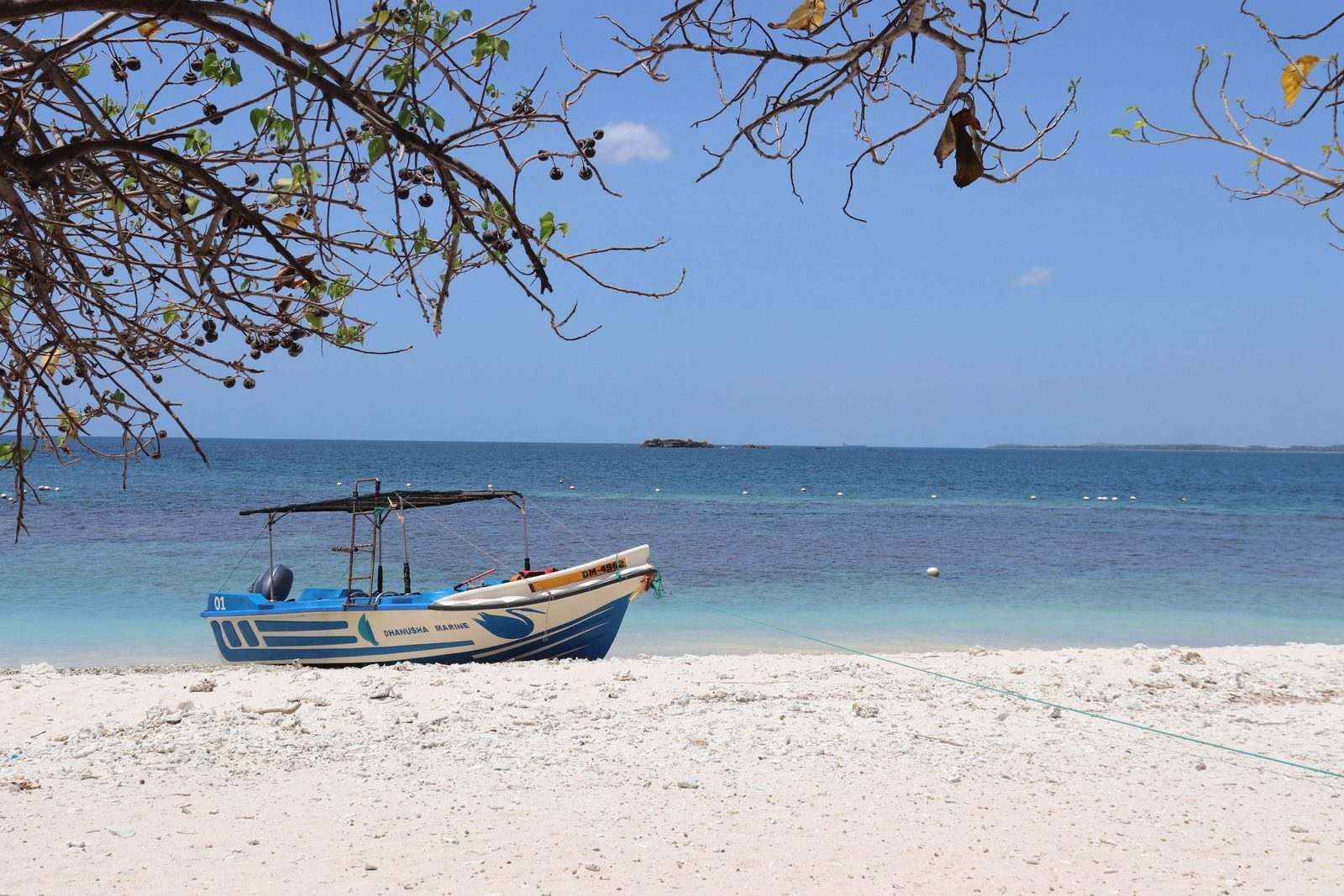 After four busy days there is nothing planned today, and that is the point. Trincomalee's beaches are among the loveliest on the island, with pale sand and clear water, and the town has a laid-back pace that suits a rest day. Spend the morning in the sea if conditions allow. From roughly May to September the water is calm and warm, and swimming, snorkelling and a walk along the sand are all easy. Outside this period the waves can be rougher, and a stroll or a book by the shore may be more appealing. Ask your hotel about kayaks or paddle boards, and about the best stretch of beach for swimming that day. If you want to do something, your driver-guide can take you on a gentle outing. Walking along the ramparts of Fort Frederick gives wide views over the harbour and the bay. The local market and fishing harbour are interesting in the early morning, when the catch comes in. Uppuveli and Nilaveli are the two best beach areas to explore, and both have simple seafood restaurants where you can have lunch with your feet in the sand. If you missed Pigeon Island or Koneswaram yesterday, today is the day to fit them in. Keep the evening easy. Watch the sky change over the water, have an early dinner and pack lightly, as tomorrow is another travel day and you return inland. Meals Breakfast Accommodation Comfortable 4-star hotel in Trincomalee or similar Included Activities
Landmarks
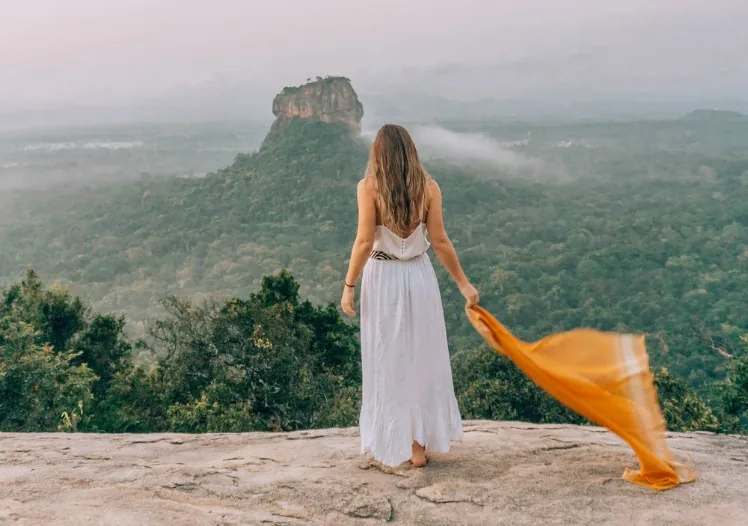 You say goodbye to the sea after breakfast and head west, back into the dry zone. The drive inland takes roughly three hours, and you arrive in Polonnaruwa in time for a late-morning start. Beside a huge reservoir, the medieval capital spreads over parkland and is a pleasant place to walk. The city flourished from the eleventh to the thirteenth century. It became the capital after King Vijayabahu defeated the Chola invaders in 1070 and restored rule by the island's own people. His successor Parakramabahu, who reigned from 1153 to 1186, was a great builder of reservoirs and irrigation canals, and the rice that these waterworks produced supported the entire kingdom. The ruins reflect that prosperity. The royal palace still has walls that suggest several storeys. The Vatadage is a round shrine with beautiful stone carving. And at Gal Vihara the granite cliff has been shaped into three huge Buddha figures, one standing, one seated and one reclining, whose calm faces are some of the finest sculpture in the country. After lunch you drive on towards Sigiriya, one to one and a half hours away. Instead of climbing the fortress today, you look at it from outside. The nearby rock of Pidurangala offers a sunset view of it, along a path past a small temple and over a final scramble of boulders. Wear sturdy shoes and bring a torch for the descent. If the day has been long, your guide can shorten the plan and take you straight to the hotel. Either way, you return to Polonnaruwa for the night, ready for a very early start tomorrow. Meals Breakfast Accommodation Hotel Sudu Araliya or similar Included Activities
Landmarks
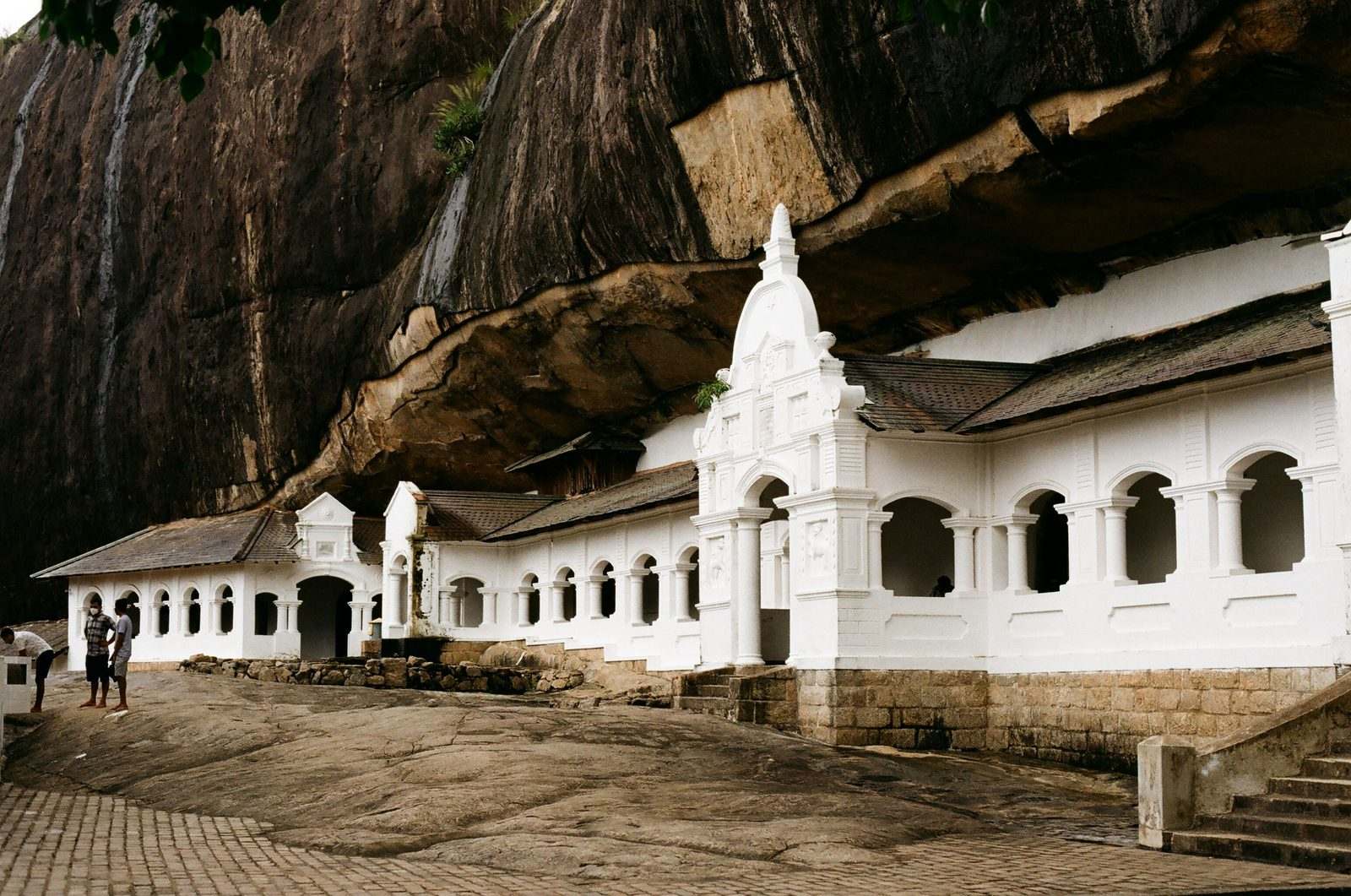 This is the one day of the tour where the alarm clock really matters. You drive from Polonnaruwa to Sigiriya in the early morning, about an hour to an hour and a half, so you can begin the climb before the heat arrives. King Kashyapa built his palace on top of this rock in the fifth century, some 200 metres above the surrounding forest. The ascent has a steady rhythm: you pass the pools and fountains of the Water Gardens, climb through terraces of huge boulders, and then reach the exposed stairways on the rock face itself. A gallery with ancient wall paintings of women holding flowers lies on the way, and further up you walk beside the polished Mirror Wall and under the great stone paws that guard the last stage. In total there are about 1,200 steps, and from the summit you can see lakes, jungle and the pale outline of Pidurangala, where you stood yesterday. Take it slowly, carry water and leave around three hours for the visit. After a late lunch and a rest, the afternoon turns to Dambulla. A short drive brings you to a rock face about 160 metres high, below which five caves were turned into shrines more than two thousand years ago. Inside, painted ceilings sweep overhead and 153 Buddha figures, three kings and four deities fill the chambers. The complex is known as the Golden Temple of Dambulla and is a World Heritage site. Climb the steps in the cooler end of the day, take off your shoes and cover your shoulders and knees. Return to Sigiriya for the night. You spent your village day earlier in the trip, so this evening is free. Meals Breakfast Accommodation Amaya Lake or similar Included Activities
Landmarks
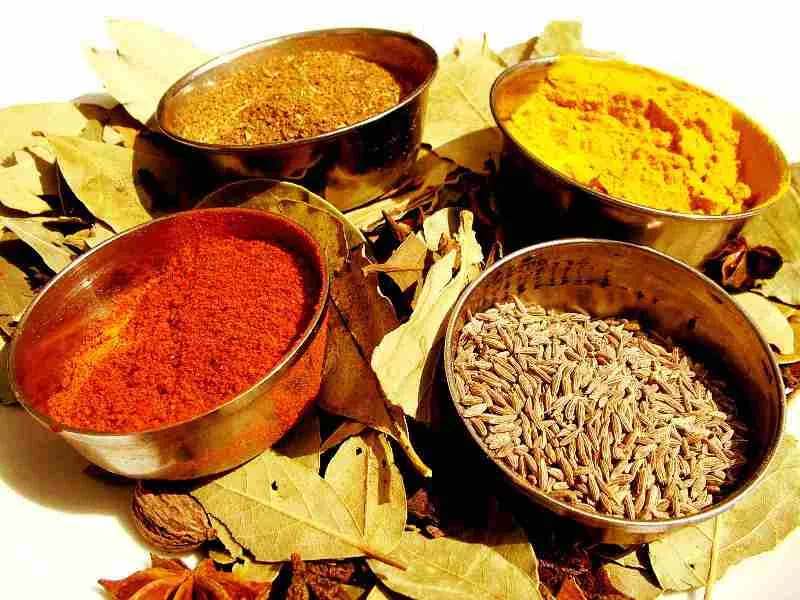 Today the plains give way to hills. You leave Sigiriya after breakfast and drive towards Kandy, about three hours from Dambulla, but the best part of the morning is a stop at Matale, a market town in the foothills. At an Ayurvedic spice garden, a guide walks you through terraces of useful plants and explains how each one is grown and used. You rub cardamom pods between your fingers, smell fresh cinnamon bark, and learn how pepper, cloves, nutmeg and vanilla are harvested and dried. Many of them are also ingredients in traditional herbal medicine, and the staff show how oils and balms are made. A cooperative of local farmers runs the nearby processing and training unit, and you can buy spices if you like. Then comes Kandy, a lakeside city in the hills that was the last stronghold of the island's kings and is now a UNESCO World Heritage site. Its great sight is the Temple of the Sacred Tooth Relic, where a revered tooth of the Buddha is kept in a golden casket. Tradition says the relic reached the island in the fourth century, smuggled from India in a princess's hair, and for most of the time since it has been the island's most precious treasure. Drums sound in the courtyards, and lines of pilgrims move slowly past the shrine with lotus flowers. Dress modestly and take your shoes off. At five o'clock you attend a traditional dance performance, about an hour long, with drummers, dancers in elaborate headdresses and a finale of fire-walking. It is a colourful way to end the day, and your hotel is close by. Meals Breakfast Accommodation Mahaweli Reach Hotel or similar Included Activities
Landmarks
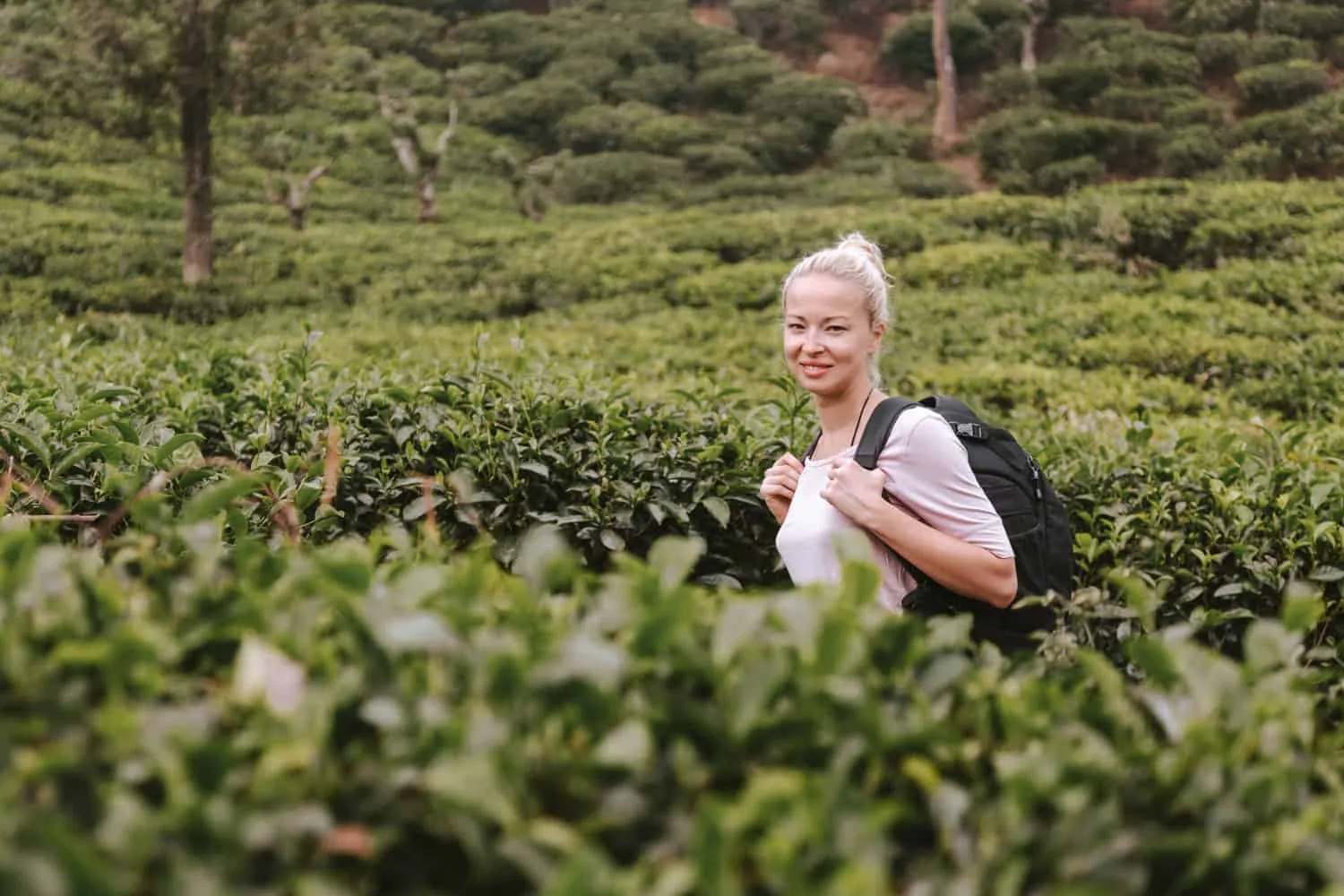 Your second day in Kandy has two main visits and plenty of space around them. In the morning you go to a gem museum and workshop, which makes a good introduction to a trade that has defined Sri Lanka for ages. Galleries display the geology behind the island's deposits and a replica of a traditional mine, while a film shows rough stones being cut, polished and set into rings, pendants and necklaces. Blue sapphires are the island's speciality, but you will also see pearls, other coloured gems and plenty of jewellery in the showroom. You can browse with no obligation to buy. The rest of the day is yours until the afternoon. A walk around the lake is a pleasant way to see the town, or you can simply put your feet up. Later, you drive west for about 5 km to the Peradeniya Royal Botanic Gardens. They lie in a loop of the Mahaweli river, at roughly 460 metres above sea level, and they count as the oldest formal gardens in the country. More than 4,000 plant species are cultivated here, and about two million people visit every year. Make for the orchid house, the spice garden, the broad avenue lined with towering trees and the palm collection, then find a shady lawn and rest your legs. The gardens are laid out on flat paths, so the walk is easy, and a couple of hours is enough. The evening is free, so you could return to the lake at dusk or ask your guide for a local restaurant that serves hill-country food. Meals Breakfast Accommodation Mahaweli Reach Hotel or similar Included Activities
Landmarks
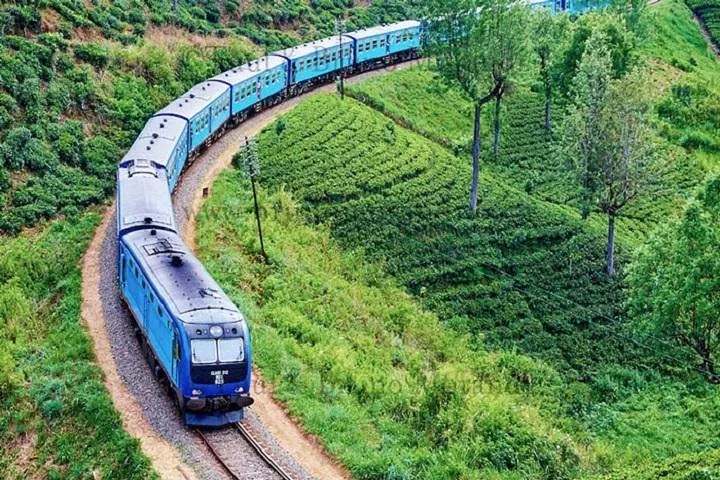 After breakfast you start the climb into the tea country, a drive of three to four hours that is far more interesting than it sounds. The road rises through villages, vegetable terraces and bright green estates, and the temperature drops with every bend. The first stop is a tea plantation with a small factory. You learn how the leaves are plucked, left to wither, rolled, oxidised, dried and sorted into grades, and you can smell each stage. The visit ends on a terrace with a cup of the freshly made tea. A bit further on, Ramboda Falls cascades down in several steps beside the road. Near it, a hillside temple is dedicated to the monkey god Hanuman, and inside stands an 18-foot statue, the tallest of its kind in the country. The temple is an important site for those following the Ramayana trail. If there is time, Devon Falls, known as the Veil of the Valley, makes a good photo stop on the way. You reach Nuwara Eliya, at roughly 1,900 metres, in the afternoon. Often called Little England, it has colonial bungalows, clipped hedges and flower beds. Your guide takes you through the busy market and then out to Hakgala Botanical Gardens, a terraced garden beneath a dramatic cliff that is known for its roses, tree ferns and orchids. Monkeys and blue magpies live among the trees. The Seetha Amman Temple nearby is a bright Hindu shrine decorated with painted figures and linked to the Ramayana. Evenings are properly cold here, so pack a warm layer for dinner. Meals Breakfast Accommodation Araliya Green Hills or similar Included Activities
Landmarks
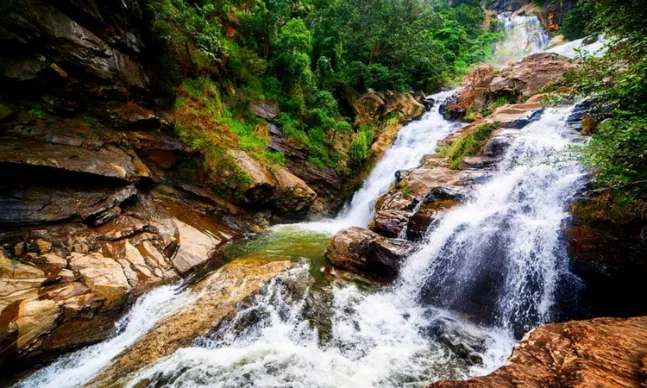
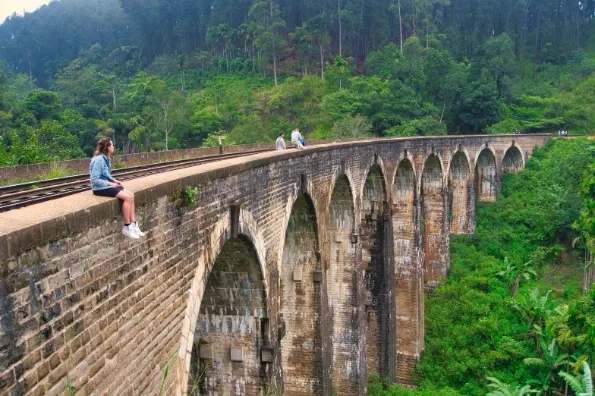 You wake in the cool air of Nuwara Eliya, have breakfast and drive south-east to Ella, a journey of about three hours by road. The scenery shifts from tea terraces to forested ridges and then to the great view where the hills fall away to the plains. Ravana Falls is the first sight on the approach. It tumbles roughly 82 feet over a rounded rock beside the main road, inside a small sanctuary. After heavy rain it swells into a broad curtain of white water, while in dry months it becomes slender, so the experience varies with the season. Local tradition links the area with King Ravana from the Ramayana epic, and your guide can tell some of the stories. Then there is the Nine Arch Bridge near Demodara, finished under British rule in 1921 and built from stone blocks and cement without steel. The arches sweep in a curve across a deep green valley, and it is one of the most photographed spots in the country. The best moment comes when a train rolls across, and your guide will help you time it. Wear shoes with grip, since the track down is often damp. After you check in at the hotel, the afternoon is yours. If you would prefer to arrive by rail, the scenic train from Nanu Oya to Ella takes about three to four hours and can replace this road transfer, with your luggage following by car. Tickets are paid for separately and seats should be booked well in advance. Whichever way you travel, spend the evening wandering the village and enjoying a quiet meal. Meals Breakfast Accommodation Te Dalu Resort & Spa or similar Included Activities
Landmarks
 This is your second night in Ella, and the day has been left open so you can choose what you enjoy. Most people spend the morning on foot and the afternoon in a cafe. The best short walk starts at the edge of the village and climbs through tea bushes to the ridge of Little Adam's Peak. It takes around an hour at a relaxed pace and offers a long view along the Ella Gap, where the hills open to the lowlands far below. Go early for cool air and clear light. Ella Rock is a tougher, longer hike that most people attempt with a local guide, and it is entirely optional. Wear proper shoes, and take water and a hat. If you like trains, Ella station is a pleasant place to watch the carriages arrive, and a short ride along the line is possible for those who want to try it. Seats are sold separately and are best arranged ahead. You could also revisit the Nine Arch Bridge for a different light, or explore the small tea shops and craft stalls along the main road. Ella is not a place of must-see sights, but a place of mood. The village is full of relaxed cafes and guesthouses, perfect for a long breakfast, a late lunch or a lazy afternoon with a book. Keep some energy for the evening, because tomorrow is a long and varied day on the road. Meals Breakfast Accommodation Te Dalu Resort & Spa or similar Included Activities
Landmarks
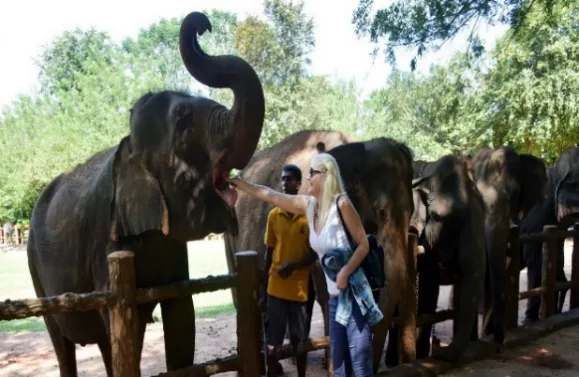 After breakfast you leave Ella and begin to descend towards the southern plains, with several worthwhile stops along the way. The drive to Udawalawe takes around two and a half hours without stops. You pass Ravana Falls again, so this is a good chance for a few more photographs if the light is right. A little further on you reach Buduruwagala, near the town of Wellawaya. Seven figures are carved into the face of a rock that looks east, and they were noticed by a British surveyor in the early twentieth century, although the local people had always known them. The name is usually explained as meaning images of the Buddha carved from rock. Few visitors come here, and it is a peaceful place to stretch your legs. In the afternoon you enter Udawalawe, a park of broad grassland and reservoir shoreline. It was created to protect the catchment area of the river and to give refuge to elephants displaced when the Walawe basin was developed, and it is now among the most visited wildlife areas on the island. Elephants live here in large numbers all year, and you can often watch whole families with calves browsing near the water. You may also see buffalo, deer, crocodiles and a variety of waterbirds. The jeep safari lasts around three hours, and the gentle evening light is perfect for photographs. Fees for the park and the jeep are paid separately. After the safari you continue to Tissamaharama for the night. A shower, a meal and an early bed are all you need, as tomorrow begins before dawn. Meals Breakfast Accommodation Chaarya Resort & Spa or similar Included Activities
Landmarks
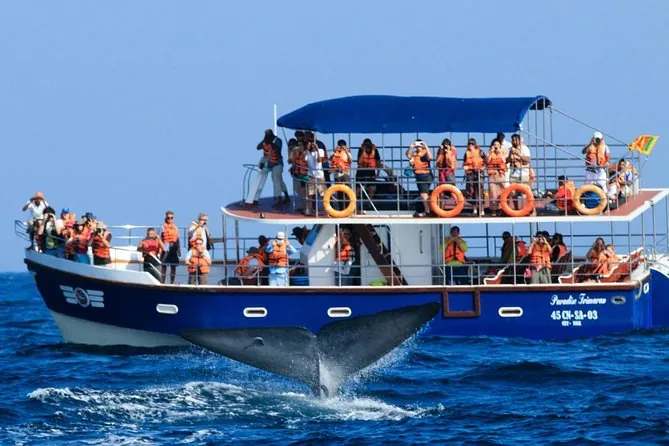 Today is long but rewarding. Your driver-guide wakes you in the dark and takes you to Yala with a breakfast pack, so that your jeep is among the first through the gates. The tracker sits up front, and you set off through scrub forest and across open plains as the light improves. Yala is often called the best safari destination in the country, and it holds one of the densest populations of leopards known anywhere. Seeing one takes luck, and a good tracker, but the park has much more to offer: elephants at the waterholes, sloth bears, crocodiles, wild boar, peacocks and an excellent range of birds. Plan on about three hours. No sighting is certain, but early morning is the most productive time. Bring layers, because the open jeep is cold at first and hot later. Park and jeep fees are paid separately. You return to your hotel for a shower and a proper breakfast, then drive about three hours along the south coast to Galle. This UNESCO fort was started by the Portuguese in 1588 and greatly expanded by the Dutch from 1649. Today it is a pleasant maze of lanes, with white churches, an old lighthouse and many small galleries and cafes. Walk the ramparts, which circle the old town, and spend a leisurely hour or two. A guided walk tells more of the stories. Finally you drive 45 minutes to Mirissa. Check in and take a walk on the beach. Whale-watching boats leave from here very early in the morning, usually from November to April, and you may want to ask about them for another trip. Meals Breakfast Accommodation Mandara Resort or similar Included Activities
Landmarks
 Spend your final morning as you wish: a last swim, a walk along the sand or a slow breakfast with the sound of the surf. Your driver-guide then takes you to the airport, a drive of roughly four hours, and will let you know the ideal departure time based on your flight. If you have a late flight, a stop at Bentota on the way gives you a place to stretch your legs beside the river. Thank you for sharing the whole island with us, and we hope to welcome you back. Meals Breakfast Included Activities
Landmarks
Route mapWhere you'll stayThese are the hotels we plan to use. If one of them is full on your dates, we book another hotel of the same standard (“or similar”) and tell you its name before you travel. Regenta Arie Lagoon or similarNegombo 1 night · Bed and breakfast · or a similar 4-star hotel Rajarata Hotel or similarAnuradhapura 2 nights · Bed and breakfast · or a similar 4-star hotel Comfortable 4-star hotel in Trincomalee or similarTrincomalee 2 nights · Bed and breakfast · exact hotel confirmed at booking Hotel Sudu Araliya or similarPolonnaruwa 1 night · Bed and breakfast · or a similar 4-star hotel Amaya Lake or similarSigiriya 1 night · Bed and breakfast · or a similar 4-star hotel Mahaweli Reach Hotel or similarKandy 2 nights · Bed and breakfast · or a similar 4-star hotel Araliya Green Hills or similarNuwara Eliya 1 night · Bed and breakfast · or a similar 4-star hotel Te Dalu Resort & Spa or similarElla 2 nights · Bed and breakfast · or a similar 4-star hotel Chaarya Resort & Spa or similarTissamaharama 1 night · Bed and breakfast · or a similar 4-star hotel Mandara Resort or similarMirissa 1 night · Bed and breakfast · or a similar 4-star hotel What's included
What's not included
Pickup & drop-offPickup: Your Volata Travels driver-guide meets you in the arrivals hall at Bandaranaike International Airport (CMB), Katunayake, with a name board. Pick-up from a hotel in Colombo or Negombo can also be arranged. Drop-off: Transfer to Bandaranaike International Airport (CMB) for your departure flight, with the timing planned around your flight. Important informationItinerary order and overnight stops can be adjusted to fit your dates and pace — this is a private tour built around you, not a fixed departure. Cancellation policyAll cancellations must be received in writing by your Volata Tour Consultant. 19.1 Unless otherwise specified in your quotation, the following cancellation terms will apply to your booking: 19.1.1 Cancellations received between the date of booking and 61 days prior to departure will result in the loss of the deposit. 19.1.2 Cancellations received 60 – 46 days prior to departure will be subject to a cancellation charge of 25% of the tour price. 19.1.3 Cancellations received 45 – 29 days prior to departure will be subject to a cancellation charge of 50% of the tour price. 19.1.4 Cancellations received 28 – 15 days prior to departure will be subject to a cancellation charge of 75% of the tour price. 19.1.5 Cancellations received 14 days or less prior to departure will be subject to a forfeiture of the entire tour price. 19.2 Cancellation of airline tickets will be subject to the refund policy of each individual airline and may be greater than the percentages above particularly when low cost/net-based fares are used. 19.3 The purchase of special event tickets is subject to the refund policy of each individual event. Please refer to the specific event policy for details. 19.4 Volata reserve the right to charge for financial penalties, fees and losses incurred in excess of your cancellation fee as a result of cancellation.... What travellers say5.0 average from 6 customer reviews MS Maria Santos, Philippines Fantastic Family HolidayThe trip was very well planned. We enjoyed the Temple of the Tooth in Kandy, the tea country around Nuwara Eliya, Ella and the southern beaches. Our driver was professional and the private vehicle gave us flexibility. Hotel arrangements were handled smoothly and the team responded quickly to our questions. MR Marco Romano, Italy We had an excellent time in Sri Lanka. The itinerary was balanced and gave us the chance to enjoy each destination without feeling rushed. The vehicle was comfortable, and the drives between stops were smooth and pleasant. SB Sanne Bakker, Netherlands Beautiful Sri Lanka ExperienceThe trip was very well planned. We enjoyed the Temple of the Tooth in Kandy, the tea country around Nuwara Eliya, Ella and the southern beaches. Our driver was professional and the private vehicle gave us flexibility. Hotel arrangements were handled smoothly and the team responded quickly to our questions. Our selected hotel arrangements were comfortable, including Selected 4-star hotels with breakfast and dinner. The accommodation worked well with the daily sightseeing schedule and gave us a good place to relax after travelling. MA Muhammad Ahmed, Pakistan We had an excellent Sri Lankan getaway. The route was organized well, and the itinerary included a lovely variety of experiences. The vehicle was comfortable, making it easy to enjoy the journey as well as the destinations. MA Mariam Al-Hinai, Oman Beautiful Sri Lanka ExperienceOur Sri Lanka tour was very enjoyable from beginning to end. The airport pickup was on time, the vehicle was clean and comfortable, and our driver was friendly and knowledgeable. We especially enjoyed Kandy, Nuwara Eliya and Ella. The hotels were comfortable and the overall program was easy to follow. Our selected hotel arrangements were comfortable, including Comfortable city and beach hotels arranged according to the itinerary. The accommodation worked well with the daily sightseeing schedule and gave us a good place to relax after travelling. CG Camille Grace, France We received excellent service. The team listened to our needs, answered our questions, and helped us plan a trip that worked well for us. You might also like 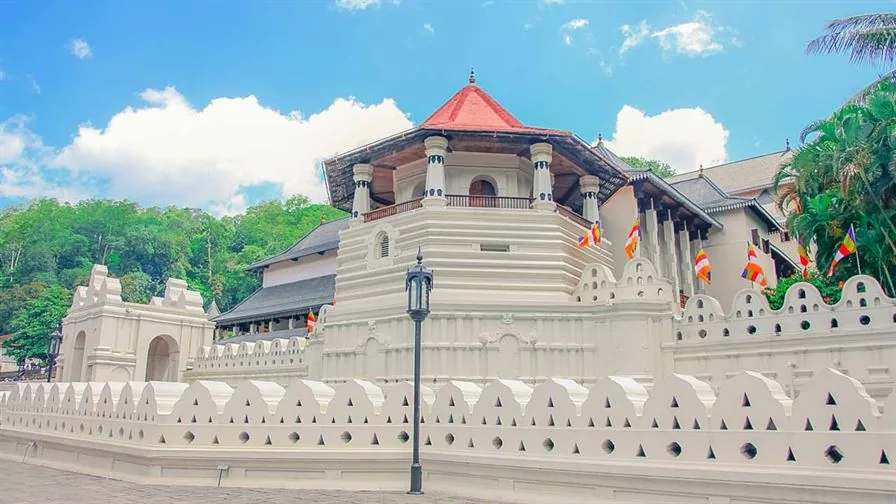  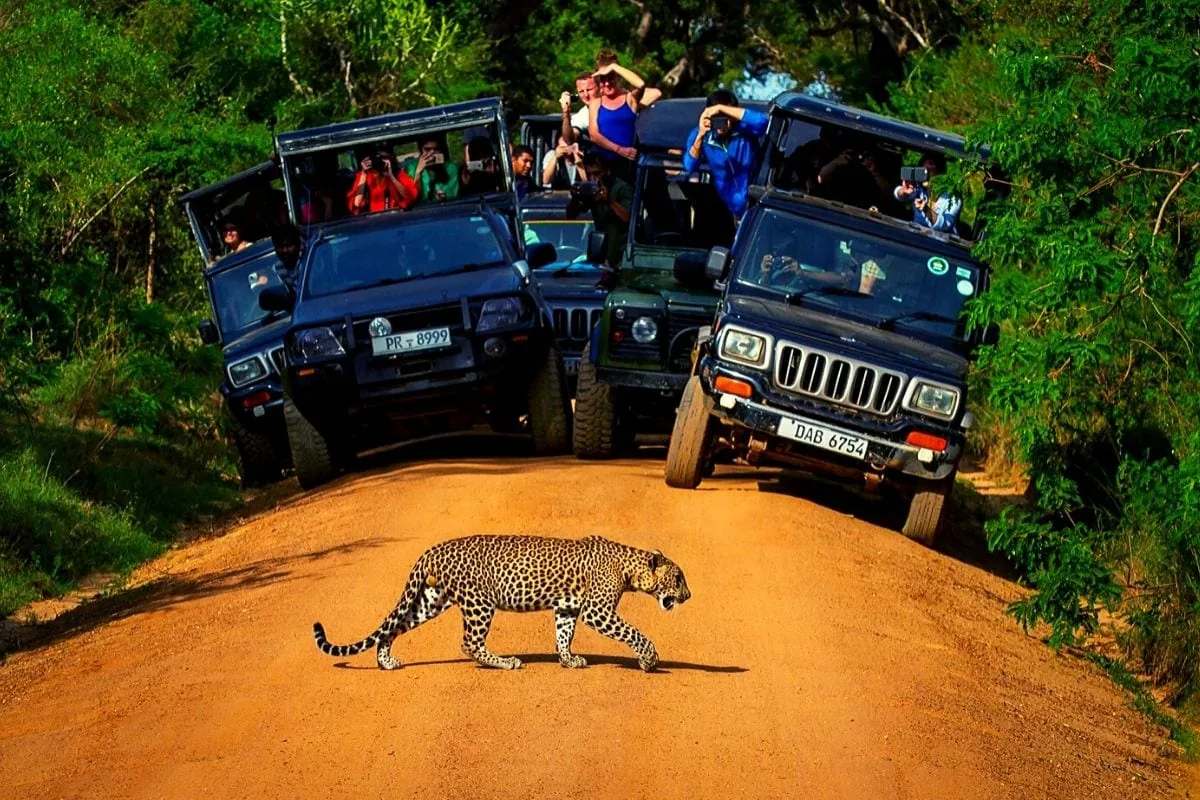  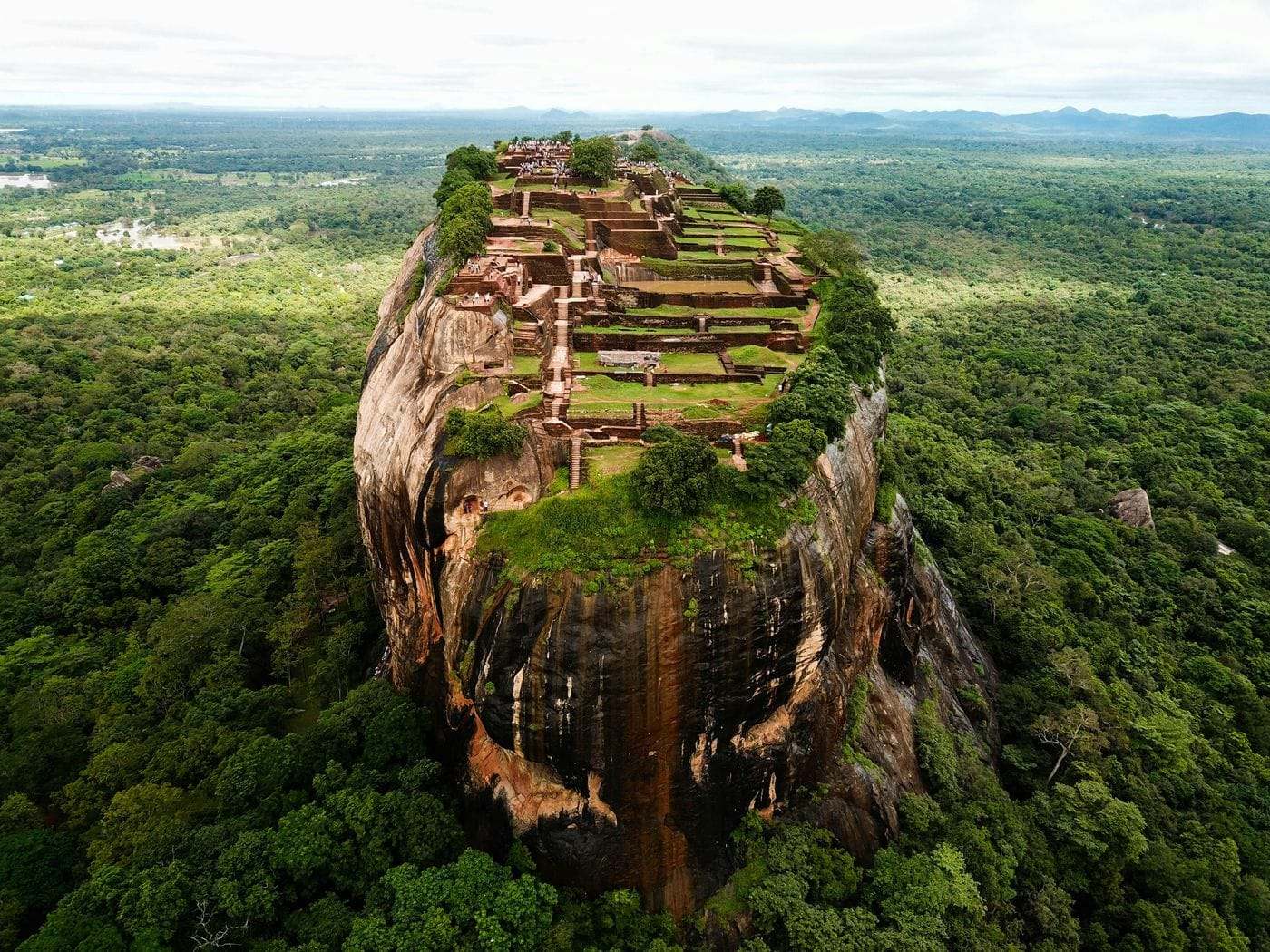 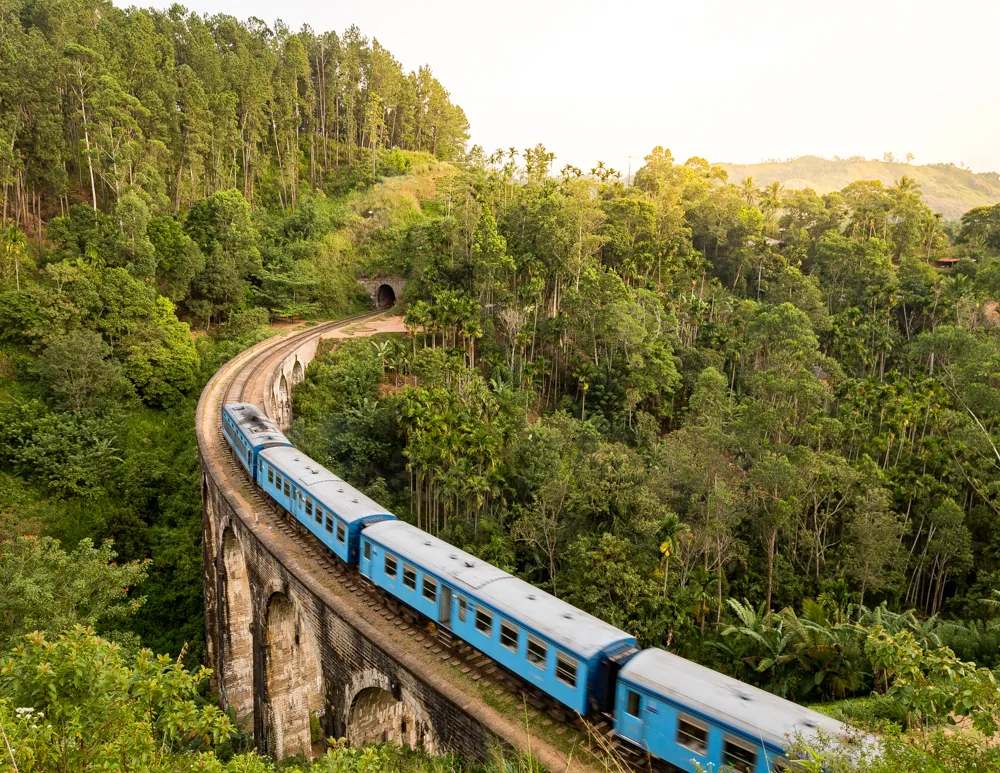 Ready to plan your Sri Lanka trip?Tell us your dates and interests — we'll put together a private itinerary within a day. |
Frequently Asked Questions
Is 15 days enough for this route from Negombo to Mirissa?
Yes, provided you are happy with a full programme. Fifteen days covers the cultural north, the east coast, Kandy, the hills, two parks and the south coast, with two-night stays in four places to break up the driving. A few days involve long transfers, but each has real stops. If you would like a slower pace or extra beach time, we can add days easily.
Why include Trincomalee on a Sri Lanka tour?
Trincomalee gives you a beach rest in the middle of the trip and a different side of the island. It has a famous natural harbour, a cliff-top Hindu temple and the snorkelling at Pigeon Island. It works best from roughly April to September, when the east-coast sea is calm. In the other months the beach is still lovely for walking, but swimming and boat trips may be limited.
What is the best time of year for this tour?
The route crosses several weather zones, so there is no perfect month. April to September suits the north, the east coast and the safari parks. December to March suits the hills, the west and the south-west. The shoulder months bring fewer travellers and greener scenery with some showers. Tell us your dates and we will explain what to expect.
Can I snorkel at Pigeon Island?
Usually yes in the calm season, from about May to September. The two small islands off Nilaveli are protected, with coral, reef fish and often turtles and small reef sharks. Boats and park entry are paid separately, and in rough seas the trips do not run. Your guide checks conditions and offers a beach alternative if the sea is not safe.
How long are the drives between places?
The longest are Negombo to the Sigiriya area, which takes about three and a half to four hours, the road to Trincomalee, which takes a few hours, the return inland of roughly three hours, and the final drive to the airport of about four hours. Others are shorter. Each long day includes sightseeing stops, and you can ask for extra breaks whenever you wish.
Do I have to climb Sigiriya Rock?
No. It is the most strenuous day on the tour, with around 1,200 steps, but you can climb part of the way or skip it. The Water Gardens and the lower terraces are interesting on their own, and Pidurangala gives a lovely view of the fortress for those who prefer a different effort. Most reasonably fit travellers manage the full climb in about three hours.
Is the scenic train included?
It is optional. The journey from Nanu Oya to Ella can replace the road transfer on the day you move to Ella, with your luggage following by car. Tickets are paid for separately and seats should be booked well in advance, so tell us at the time of booking. If you would rather skip it, the road trip visits the waterfall and the bridge.
Is this tour suitable for children?
It suits children aged about ten and over who enjoy being outdoors, since there are many long drives and a few early starts. Elephants at Udawalawe, the bullock-cart ride, snorkelling and the beach days are popular. Younger children may prefer to skip the upper part of Sigiriya. Tell us the ages of your group, and we will pace the days sensibly.
Can the route be changed?
Yes. Every Volata Travels itinerary can be customised. People often add a night in the hills, replace the east coast with more days in the south, or add whale watching in Mirissa in season. Send your preferred dates and ideas when you enquire, and we will revise the plan and confirm the price.
What's included in the 15-day tour price?
Meet and greet at Bandaranaike International Airport; 14 nights in 4-star hotels (or similar), double or twin room sharing; a single room if you travel alone; Daily breakfast at your hotels (bed and breakfast); All transfers and sightseeing in a private air-conditioned vehicle; English-speaking driver-guide throughout the tour; Fuel, parking, driver accommodation and highway fees. The tour costs USD 1567 per person when two adults share a room, or USD 2960 for one traveller in a single room, for 14 nights / 15 days. These prices are valid for travel from 8 October 2026 to 30 November 2027.
What's not included?
International flights and the Sri Lanka ETA visa fee; Lunches, dinners and drinks (breakfast is included); Entrance fees and activity fees (village experience, Anuradhapura sacred city, Pigeon Island boat trip, Polonnaruwa ancient city, Pidurangala Rock, Sigiriya Rock, Dambulla Cave Temple, Temple of the Sacred Tooth Relic and cultural show and more); Optional tours and optional activities; Train tickets (if you choose the scenic train); Hotel supplements when you travel on 24 December and 31 December (New Year), and the Christmas supplement on 24 December; Tips, porterage and personal expenses; Early check-in and late check-out at hotels; Travel insurance and bank charges.
Is the price the same on 24 and 31 December?
Not quite. Hotels charge a compulsory supplement for the nights of 24 December (Christmas Eve) and 31 December (New Year's Eve), and these supplements are not included in the tour price. If your dates include either night, tell us when you enquire and we will confirm the supplement for the hotels on your route before you book.
Can I customize this tour?
Yes. The order of stops, the number of nights in each place, the hotels and the activities can all be adjusted to your dates, pace and budget — this is a private tour built around you, not a fixed group departure. Tell us what you would like to change and we will send a revised quote.
What is the cancellation policy?
All cancellations must be received in writing by your Volata Tour Consultant. Cancellations received up to 61 days before departure result in the loss of the deposit. Between 60 and 46 days before departure a charge of 25% of the tour price applies; between 45 and 29 days, 50%; between 28 and 15 days, 75%; and 14 days or less before departure the entire tour price is forfeited. Airline tickets follow the refund policy of each airline, and special event tickets follow the policy of each event. The full Terms & Conditions are at www.volatatravels.com/terms-and-conditions.